


Power surges can happen in an instant, but the damage they cause can be expensive and long-lasting. From refrigerators and televisions to HVAC systems and smart home devices, today’s homes rely on sensitive electronics that can be affected by sudden voltage spikes.
A whole-home surge protector is designed to help reduce the risk of electrical damage by protecting your home’s electrical system from unexpected surges. But is it worth installing one? Understanding how surge protection works can help you decide whether it’s a worthwhile investment for your home.
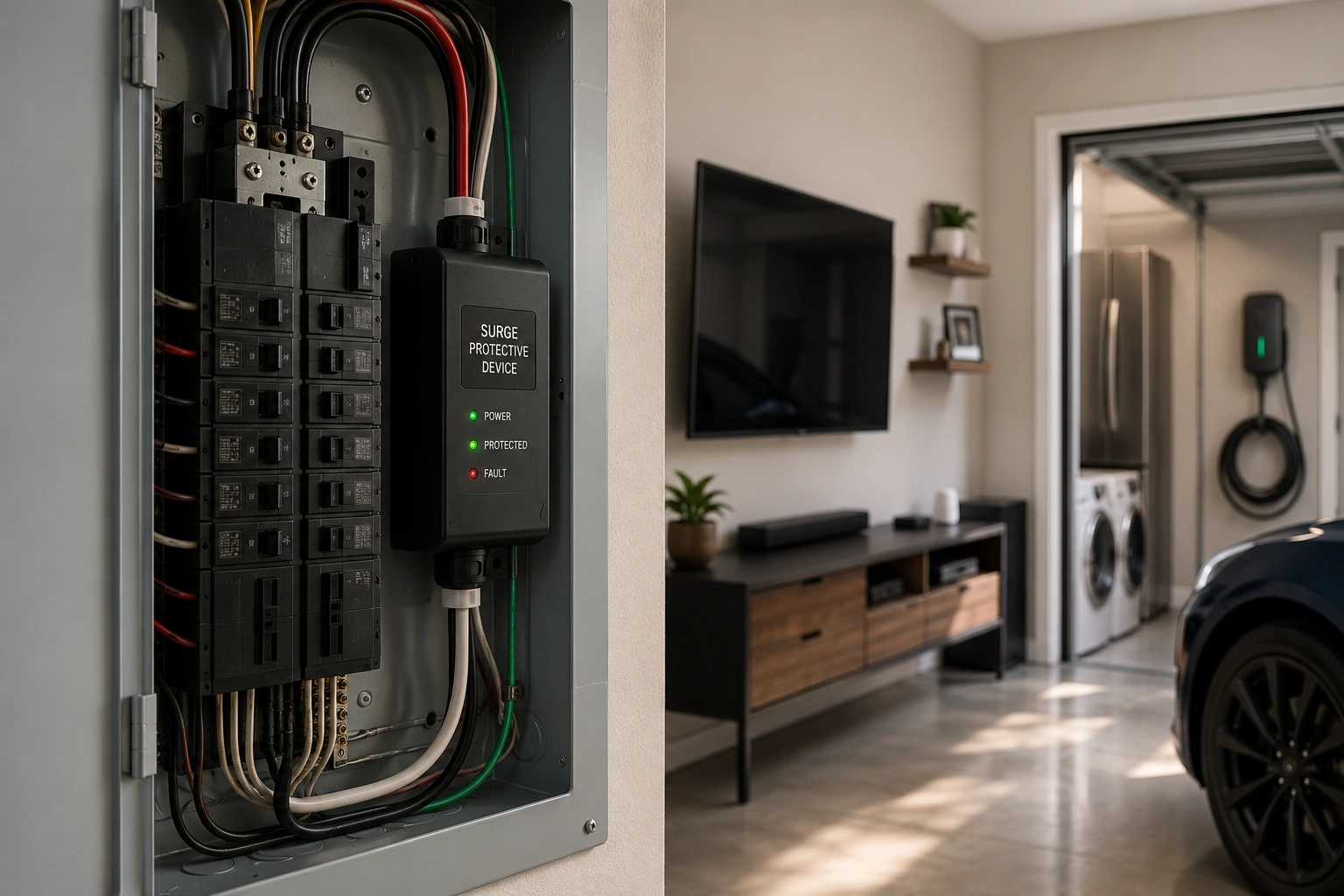
A whole-home surge protector is a device installed directly at your home’s electrical panel. Its purpose is to divert excess electrical voltage away from your home’s wiring before it reaches connected appliances and electronics.
Unlike plug-in surge protector power strips, which only protect individual devices, a whole-home surge protector helps provide protection for the electrical circuits throughout your entire home.
Many homeowners assume power surges only occur during lightning storms, but lightning is just one possible cause.
Common causes of electrical surges include:
Many smaller surges happen without homeowners even noticing them, but repeated voltage spikes can slowly damage electronic components over time.
A whole-home surge protector can help reduce the risk of damage to many electrical devices, including:
While no surge protector can guarantee complete protection from every electrical event, it can significantly reduce the impact of many common surges.
Many power strips include basic surge protection, but they only protect the devices plugged into that specific strip.
A whole-home surge protector works at the source—your electrical panel—helping protect major appliances and hardwired equipment that cannot be plugged into a power strip, such as your HVAC system or water heater.
For added protection, many electricians recommend using both a whole-home surge protector and quality surge-protected power strips for sensitive electronics.
For many homeowners, the cost of replacing damaged electronics or major appliances can far exceed the cost of installing surge protection.
As homes continue to rely on more expensive technology, including smart thermostats, home automation systems, and EV chargers, protecting these investments becomes increasingly important.
A whole-home surge protector may also help reduce the likelihood of costly repairs caused by unexpected voltage spikes.
Installing a whole-home surge protector may be a good idea if:
Even newer homes can benefit from surge protection, as modern electronics are often more sensitive to voltage fluctuations than older equipment.
Whole-home surge protectors can help reduce damage caused by many electrical surges, including those associated with nearby lightning activity.
However, a direct lightning strike can produce an extremely large surge that exceeds the capacity of most protective devices. Surge protectors are designed to minimize common electrical surges, but no system can completely eliminate every risk.
A whole-home surge protector should always be installed by a licensed electrician.
Proper installation ensures the device is correctly connected to your electrical panel and complies with current electrical codes. An electrician can also verify that your electrical system is suitable for installation and recommend the appropriate surge protection for your home’s needs.
If you’re interested in adding whole-home surge protection, Apex Electrical, AC & Heating can help. Our licensed electricians can assess your electrical system, recommend the right surge protection solution, and perform a safe, code-compliant installation. Contact us today to schedule an electrical evaluation and help protect your home’s valuable electronics and appliances.