


Choosing the right size air conditioner is one of the most important decisions when replacing or installing a new cooling system. Many homeowners assume that a larger air conditioner will cool their home better, but that’s not always the case. An oversized or undersized system can lead to higher energy bills, uneven temperatures, and unnecessary wear on the equipment.
Finding the right size air conditioner requires evaluating several factors beyond the square footage of your home. A professional assessment helps ensure your system provides reliable comfort while operating efficiently.
The size of an air conditioner refers to its cooling capacity rather than its physical dimensions. Cooling capacity is measured in British Thermal Units (BTUs) or tons, with one ton equal to 12,000 BTUs of cooling per hour.
An air conditioner that is properly sized will maintain comfortable indoor temperatures while using energy efficiently and reducing unnecessary strain on the system.
An undersized air conditioner may struggle to keep your home cool during hot Texas summers.
Common problems include:
Because the system runs almost continuously, it may also experience more frequent repairs over time.
Many homeowners believe a larger air conditioner is always better, but an oversized system can create its own set of problems.
An oversized AC often cools the home too quickly, causing it to turn on and off repeatedly. This process, known as short cycling, can reduce efficiency and increase wear on the equipment.
It may also lead to:
A properly sized system provides longer, more consistent cooling cycles that help improve comfort and indoor air quality.
Several factors influence the size of air conditioner your home needs.
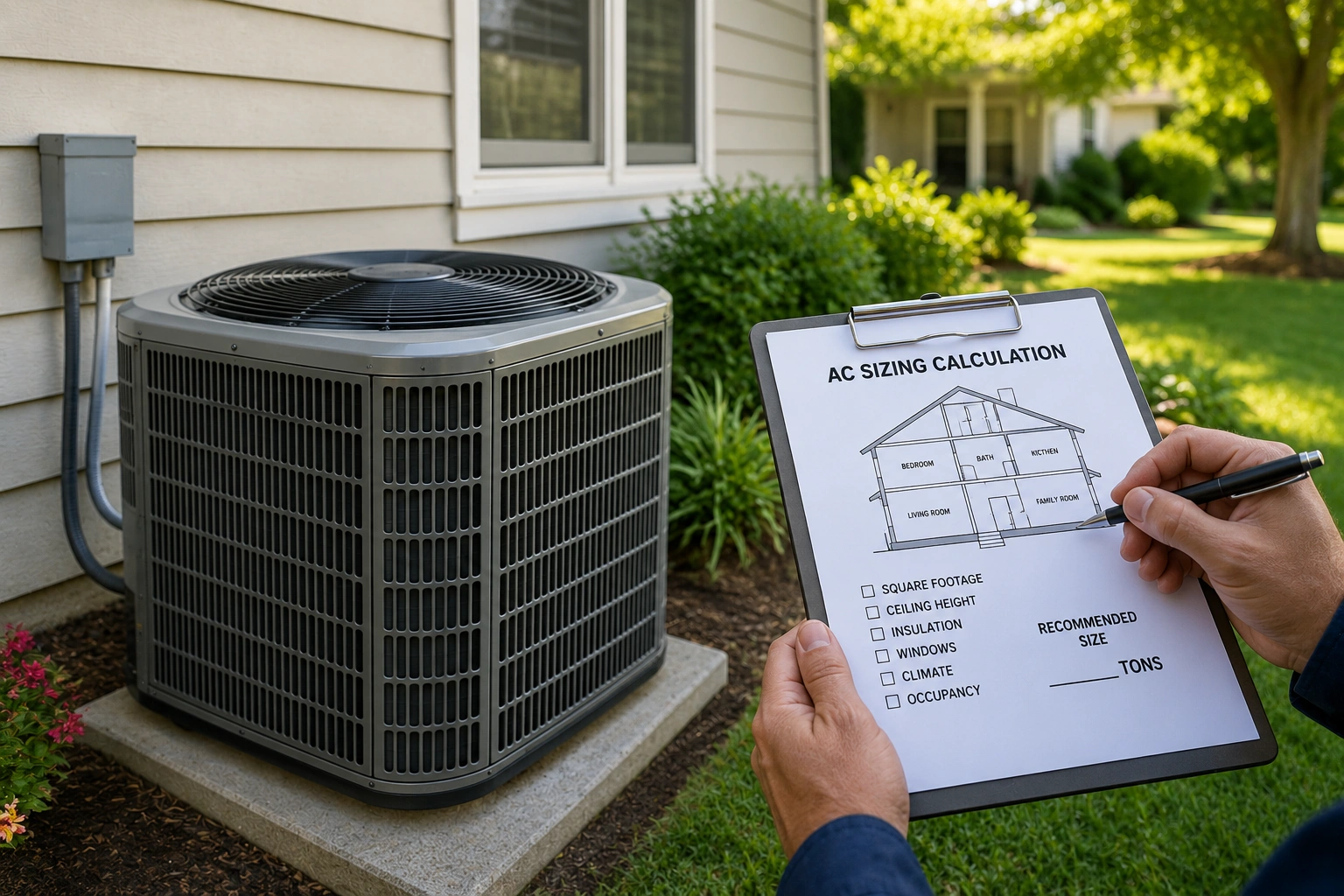
Square footage is one of the first considerations, but it should never be the only factor used when selecting an HVAC system.
Homes with higher ceilings contain more air that must be cooled, which may increase the required cooling capacity.
Well-insulated homes retain cooled air more effectively, reducing the workload placed on the air conditioner.
Large windows, especially those facing direct sunlight, can increase heat gain inside the home.
Open floor plans, multiple stories, and room placement all affect how air moves throughout the home.
Homes in Texas experience longer and hotter cooling seasons than many other parts of the country, making proper system sizing especially important.
The number of people living in the home, along with heat-producing appliances and electronics, can also influence cooling requirements.
Online AC sizing calculators often estimate system size using only square footage. While these tools provide a general idea, they cannot account for the many factors that affect cooling needs.
Two homes with the same square footage may require different air conditioning systems depending on insulation, window placement, ceiling height, and overall construction.
This is why professional sizing is recommended before purchasing a new system.
HVAC professionals use industry-recognized methods to estimate your home’s cooling requirements.
During an assessment, they evaluate factors such as:
This detailed evaluation helps determine the most appropriate cooling capacity for your home.
If your current air conditioner wasn’t properly sized, you may notice:
These symptoms don’t always mean the system is the wrong size, but they may indicate it’s worth having your HVAC system evaluated.
If you’re planning to replace your air conditioner or want to make sure your current system is the right fit for your home, Apex Electrical, AC & Heating can help. Our experienced HVAC technicians can evaluate your home’s cooling needs and recommend the right system for reliable, energy-efficient comfort. Contact us today to schedule a professional HVAC assessment.