


Your home’s electrical system works behind the scenes every day, powering everything from lighting and appliances to heating, cooling, and entertainment systems. While electrical problems aren’t always obvious, hidden issues can develop over time and may increase the risk of equipment damage or electrical hazards.
A professional electrical safety inspection is designed to identify potential problems before they become costly repairs or safety concerns. Whether you’ve recently purchased a home, own an older property, or simply want peace of mind, an inspection can help ensure your electrical system is operating safely and efficiently.
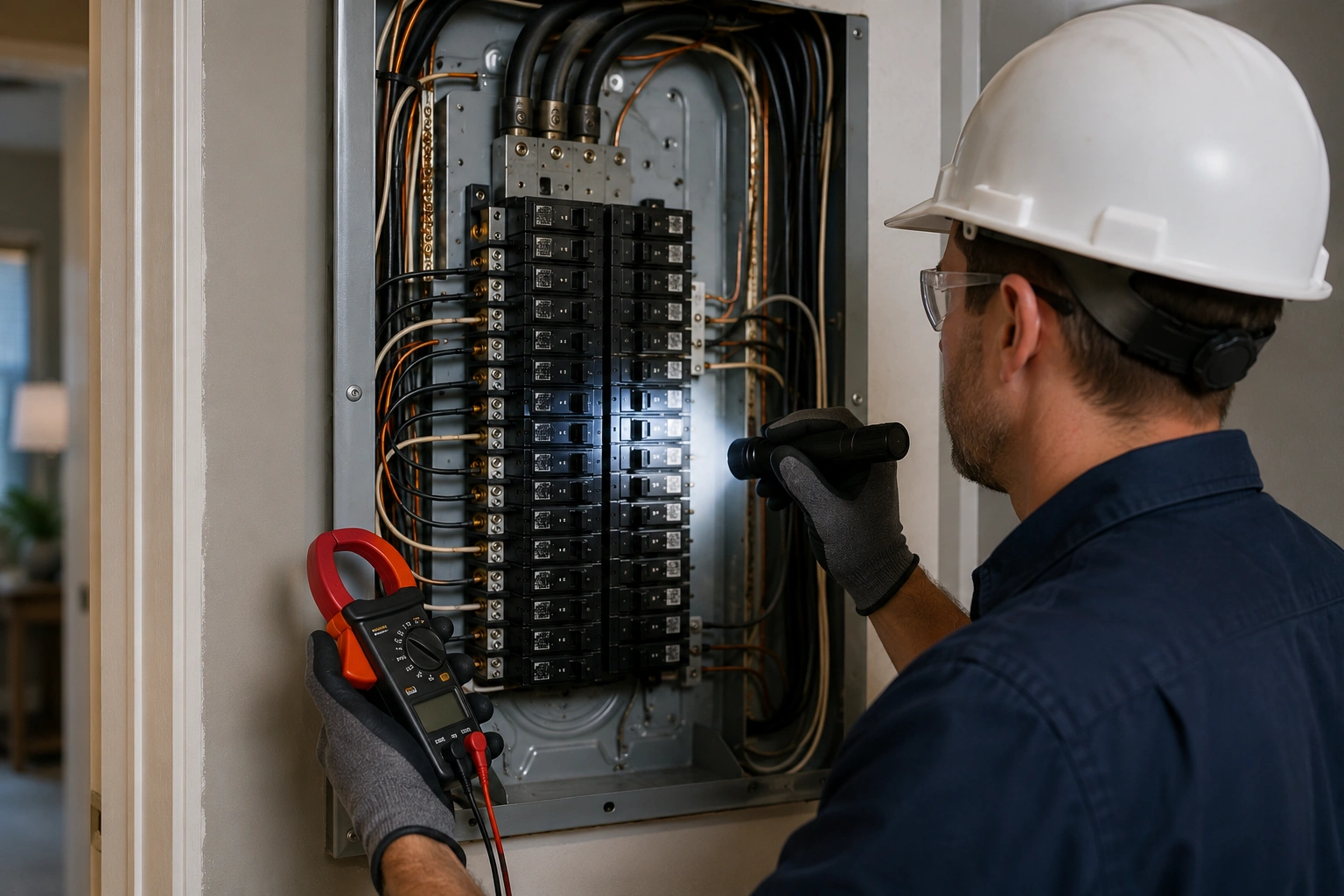
An electrical safety inspection is a thorough evaluation of your home’s electrical system performed by a licensed electrician.
The goal is to identify damaged, outdated, or improperly installed electrical components that could affect safety, reliability, or code compliance.
Rather than waiting for an electrical issue to appear, inspections allow potential problems to be found and addressed early.
Electrical systems experience wear over time, especially in homes with aging wiring or increasing power demands.
A professional inspection can help:
Regular inspections are particularly valuable before remodeling projects or when adding large electrical loads such as EV chargers or hot tubs.
Every inspection may vary depending on the home’s age and electrical system, but most include a comprehensive review of key components.
The electrician will inspect the main electrical panel for:
The panel is one of the most important parts of the inspection because it distributes electricity throughout the home.
Visible wiring is checked for signs of:
Older homes may contain wiring methods that are no longer recommended for modern electrical demands.
The inspection typically includes testing outlets and switches throughout the home.
The electrician checks for:
Special attention is often given to kitchens, bathrooms, garages, and outdoor areas where additional electrical protection is required.
Modern electrical codes require protective devices in certain areas of the home.
The electrician will verify the operation of:
These devices help reduce the risk of electrical shock and electrical fires.
Depending on the scope of the inspection, smoke alarms and carbon monoxide detectors may also be checked to ensure they are properly installed and functioning.
Electrical inspections often reveal issues that homeowners may not notice.
Some common findings include:
Many of these issues can be corrected before they develop into larger problems.
A professional inspection is recommended if:
Even if your electrical system appears to be working normally, periodic inspections can help identify hidden concerns.
Once the inspection is complete, the electrician will explain any issues that were found and discuss possible solutions.
In many cases, recommendations may include:
Not every issue requires immediate repair, but understanding your home’s electrical condition helps you prioritize future improvements.
If you’d like peace of mind knowing your home’s electrical system is operating safely, Apex Electrical, AC & Heating is here to help. Our licensed electricians perform thorough electrical safety inspections, identify potential issues, and provide honest recommendations to keep your home safe and reliable. Contact us today to schedule your professional electrical inspection.