


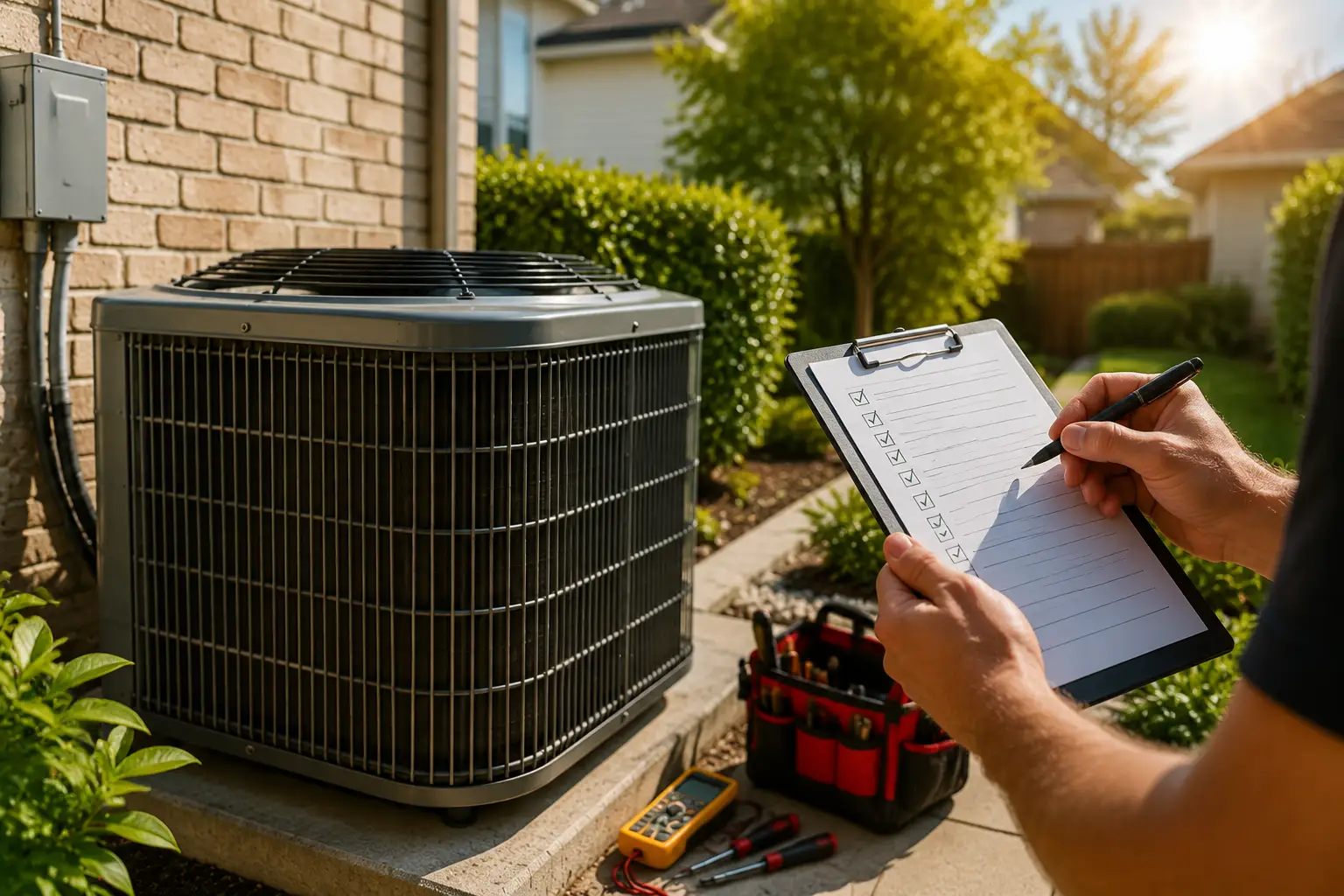
Texas summers can be extremely demanding on your HVAC system. When temperatures climb into the triple digits, your air conditioner may run for hours each day to keep your home comfortable. If your system is not properly prepared before a heat wave arrives, it may struggle to maintain indoor temperatures, consume more energy, or experience unexpected breakdowns.
A little preparation before extreme heat can help improve efficiency, reduce the chance of costly repairs, and keep your home comfortable throughout the hottest months.
This complete HVAC checklist will help Texas homeowners prepare their cooling systems before the next heat wave.
Your HVAC filter plays an important role in maintaining airflow and system efficiency.
During heavy summer use, a dirty air filter can restrict airflow and force your AC system to work harder than necessary.
A clogged filter can lead to:
Before summer temperatures peak, inspect your filter and replace it if it appears dirty. Homes with pets, allergies, or higher dust levels may require more frequent filter changes.
One of the best ways to prepare your HVAC system for a Texas heat wave is with professional maintenance.
During a maintenance visit, an HVAC technician can inspect important components and identify potential issues before they become emergency repairs.
Professional AC maintenance typically includes:
Regular maintenance helps your AC operate more efficiently when it is working hardest.
Your outdoor condenser needs proper airflow to release heat from your home.
Over time, leaves, grass, dirt, and debris can collect around the unit and reduce performance.
Before extreme summer temperatures arrive:
A clean outdoor unit can operate more efficiently and maintain better cooling performance.
Your thermostat controls when your AC system turns on and off. Before a heat wave, make sure it is working correctly.
Check that:
Many homeowners also upgrade to smart thermostats for better temperature control, scheduling, and energy monitoring.
Blocked or closed vents can reduce airflow and create uneven temperatures throughout your home.
Before summer arrives:
Proper airflow allows your HVAC system to distribute cool air more effectively.
Your duct system carries cooled air throughout your home. If ducts have leaks, conditioned air can escape before reaching your rooms.
Common signs of duct problems include:
Sealing duct leaks can improve comfort and help your AC system work more efficiently.
Even a powerful HVAC system can struggle if your home does not hold cooled air effectively.
Poor insulation allows heat to enter your home, causing your AC to run longer.
Important areas to check include:
Improving insulation can reduce cooling demand and improve overall comfort.
Your air conditioner removes humidity from your home while cooling. That moisture drains through a condensate line.
If the drain line becomes clogged, it can cause:
Checking the drain line before peak summer usage can help prevent unexpected problems.
Small HVAC problems can become major failures during extreme heat.
Pay attention to warning signs such as:
Addressing these problems early can help prevent a complete system breakdown during a heat wave.
Constantly adjusting your thermostat can cause your HVAC system to work harder.
During Texas summers, many homeowners find that maintaining a consistent temperature helps improve efficiency.
Additional ways to reduce cooling demand include:
Texas heat puts significant stress on air conditioning systems. When your AC runs continuously for days, even small problems can quickly become major issues.
Preparing your HVAC system helps:
A properly maintained system is better prepared to handle extreme temperatures.
You should schedule professional service before a heat wave if you notice:
An HVAC professional can inspect your system and ensure it is ready for the hottest days of the year.
At Apex Electrical & AC, we help Texas homeowners prepare their cooling systems for extreme summer temperatures through professional AC maintenance, repairs, and HVAC services.
Our technicians can inspect your system, identify potential issues, and provide solutions to keep your home comfortable when temperatures rise.
Whether you need seasonal maintenance, AC repairs, or a complete HVAC evaluation, our team is ready to help keep your system running efficiently.
Preparing your HVAC system before a Texas heat wave can help prevent unexpected breakdowns and improve your home’s comfort during the hottest months.
Simple steps like replacing filters, cleaning the outdoor unit, checking airflow, and scheduling professional maintenance can make a major difference in how efficiently your AC performs.
Don’t wait until your air conditioner fails during extreme heat. Preparing your system early helps ensure reliable cooling when you need it most.