


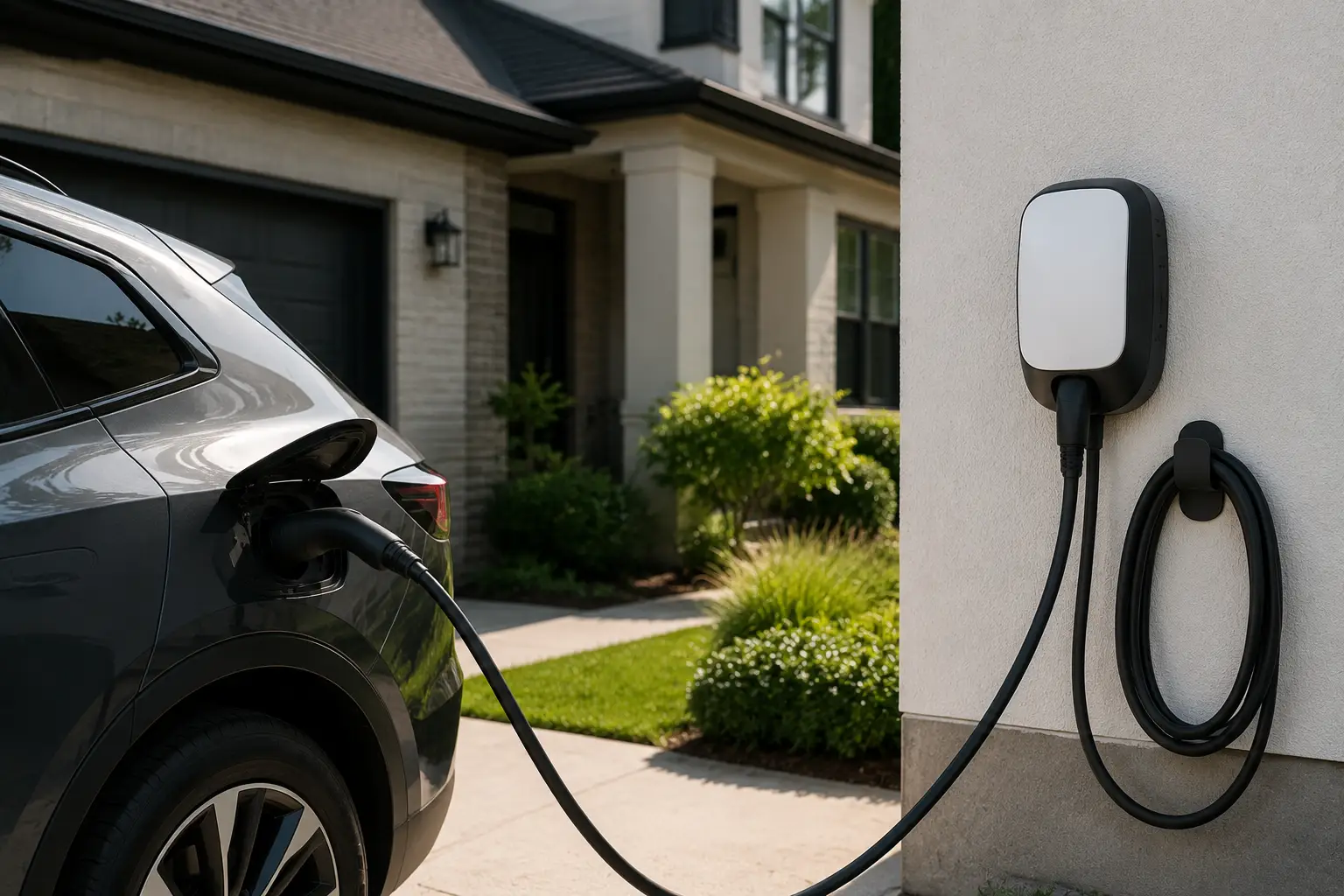
Electric vehicles (EVs) are becoming increasingly popular among Texas homeowners who want a more convenient, efficient, and cost-effective way to travel. While public charging stations are becoming more common, many EV owners prefer the convenience of charging their vehicles at home.
Installing a home EV charger allows homeowners to charge their vehicle overnight, avoid frequent trips to public charging stations, and have better control over their daily driving needs.
However, installing an EV charger is not as simple as plugging in a device. Your home’s electrical system must be able to safely handle the additional power demand.
Understanding the installation process, electrical requirements, and safety considerations can help Texas homeowners make informed decisions before adding an EV charger to their property.
Many electric vehicles can be charged using a standard household outlet, but this method is often slow and may not provide enough charging capacity for daily driving needs.
A dedicated home EV charger offers several advantages:
Level 2 EV chargers, which are commonly installed in homes, can charge vehicles significantly faster than a standard outlet.
This means homeowners can:
Having a charger at home eliminates the need to search for public charging stations regularly.
You can simply plug in your vehicle when you arrive home and allow it to charge while you sleep or complete daily activities.
A professionally installed EV charger can add convenience and functionality to your home, especially as electric vehicles become more common.
Before installation, homeowners should understand the different charging levels available.
Level 1 chargers use a standard household outlet.
Advantages:
However, charging speeds are much slower and may not be practical for homeowners who drive frequently.
Level 2 chargers are the most common choice for residential installations.
They typically require:
Benefits include:
For many Texas homeowners, Level 2 charging provides the best balance between performance and practicality.
Before installing an EV charger, it is important to determine whether your electrical system has enough capacity.
Many older homes were not designed for today’s electrical demands, including:
An electrician may need to evaluate:
If your electrical panel cannot support the additional demand, a panel upgrade may be necessary.
A professional EV charger installation typically involves:
EV chargers require their own dedicated circuit to safely provide consistent power.
Sharing a circuit with other appliances can create safety risks and performance issues.
The correct wiring size and electrical components are essential for safe operation.
Incorrect installation can lead to:
The charger location should be convenient while considering:
A professional installer can help determine the best location.
Not every home requires a panel upgrade, but some properties may need additional electrical capacity.
An upgrade may be recommended if:
A professional electrical inspection can determine whether your existing system is ready for an EV charger.
While some homeowners may consider installing an EV charger themselves, professional installation provides important safety advantages.
A licensed electrician can:
Proper installation helps protect both your vehicle and your home’s electrical system.
Charging an electric vehicle will increase your home’s electricity usage. However, many homeowners can manage this by:
Smart EV chargers can provide additional control by allowing homeowners to schedule charging times and track usage.
Installing an EV charger is often part of a larger trend toward home electrification.
As more homeowners adopt electric technology, future electrical demands may include:
Upgrading your electrical system today can help prepare your home for future technology.
Before adding an EV charger, consider an electrical inspection if you notice:
Addressing electrical issues before installation helps ensure a safer charging setup.
At Apex Electrical & AC, we help Texas homeowners safely install EV charging solutions designed around their home’s electrical capacity.
Our team can inspect your electrical system, determine installation requirements, and provide professional EV charger installation to ensure reliable and safe performance.
Whether you are purchasing your first electric vehicle or upgrading your home’s electrical capabilities, proper installation is essential for long-term convenience.
Installing an EV charger at home can make owning an electric vehicle easier, faster, and more convenient. However, your home’s electrical system must be properly evaluated before installation.
From checking panel capacity to installing dedicated circuits, professional electrical service ensures your charger operates safely and efficiently.
As electric vehicles continue growing in popularity across Texas, preparing your home with the right electrical infrastructure can help you enjoy the benefits of cleaner and more convenient transportation.