


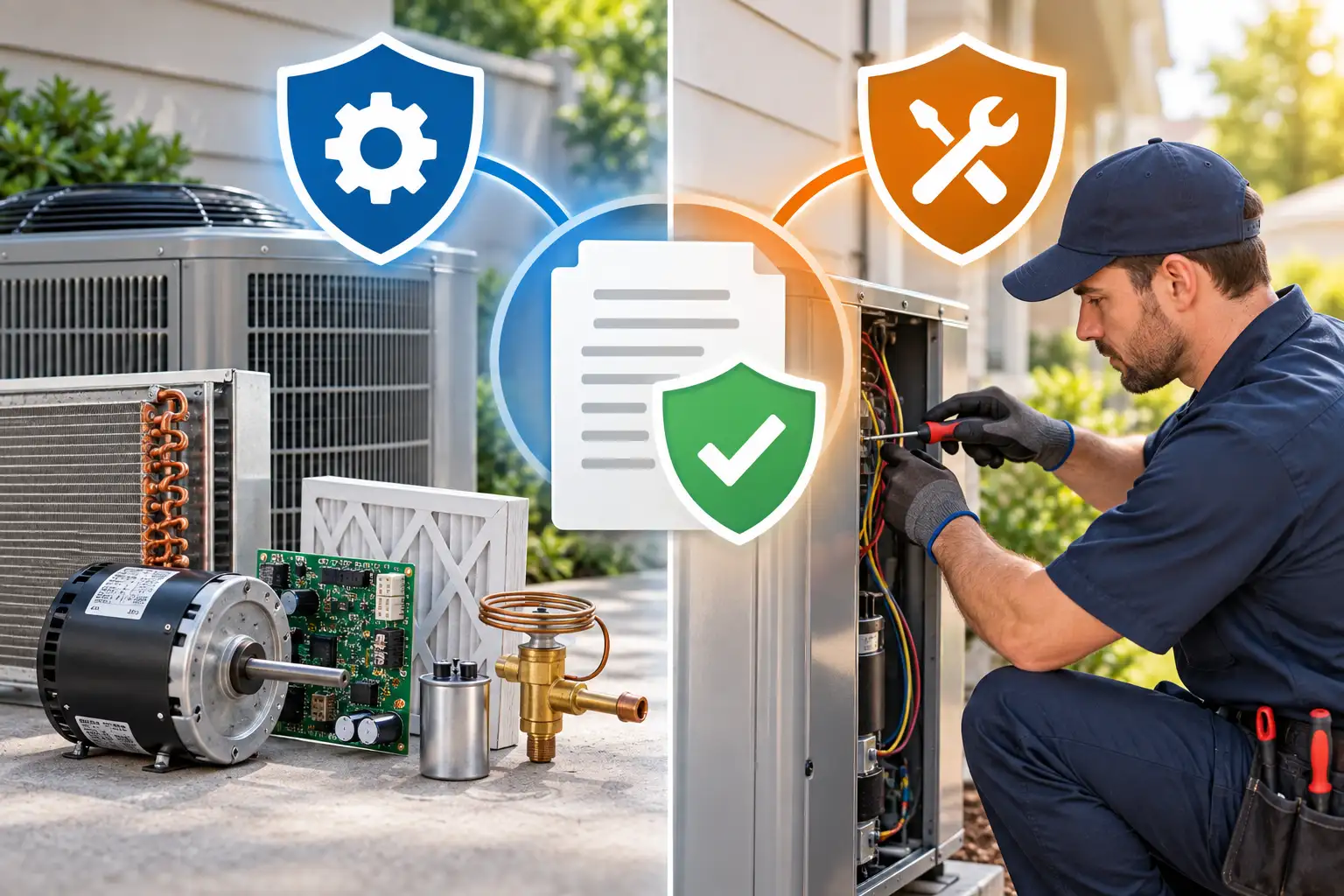
An HVAC parts warranty may cover an eligible replacement component without paying the technician’s labor to install it. Labor coverage is a separate question, and the answer depends on the written warranty or service agreement for your equipment.
That is why a system can be described as under warranty while a repair still has a charge. The useful question is not simply whether coverage exists, but which part of the job it covers.
A manufacturer’s limited parts warranty sets out which component failures qualify, how long coverage lasts, and what conditions apply. It should not be assumed to cover every expense connected with a repair.
For example, Trane’s warranty information distinguishes its base and registered parts warranties from optional extended coverage. Its standard parts coverage does not include repair labor. The terms for your own brand and model control your claim.
Labor coverage may come through a manufacturer program, an installing contractor, or a separate service agreement. An installation workmanship promise and coverage for future component replacement are not necessarily the same thing.
Read the description of covered work. Does it address correcting installation problems, replacing a covered failed part, or both? Who authorizes the job, and which contractor can perform it?
Manufacturer programs also vary. Carrier’s warranty page describes eligible equipment options that can include labor, subject to registration, program conditions, and dealer participation. This is a reason to check your actual paperwork rather than assume all equipment has parts-only coverage.
Imagine a covered component needs replacement. Ask the contractor to identify the component allowance, installation labor, diagnostic visit, and any additional materials or services on the estimate.
The point is not that every warranty excludes those additional items. It is that you need an answer for each one. A single line saying warranty repair does not explain your final responsibility.
Before authorizing work, request a written breakdown showing what the company expects the warranty to pay and what you would pay. Ask whether coverage has been confirmed or is still awaiting approval.
Registration can affect coverage on eligible equipment, and requirements vary by manufacturer, product, location, and installation date. Do not assume the installer completed registration unless you have confirmation.
If you recently bought the home, ask whether the coverage transfers and whether any action is required. Keep the warranty certificate rather than relying only on the previous owner’s description.
When the indoor and outdoor equipment have separate model and serial numbers, record both. This helps avoid checking coverage for one component and assuming the answer applies to the entire system.
Save the installation invoice, model and serial numbers, registration confirmation, warranty terms, and service records together. Add the contact information for the company that administers any separate labor agreement.
When requesting service, explain the symptom and say that you would like coverage checked before approving the repair. Share the documents rather than trying to interpret a lengthy agreement over the phone.
Apex provides residential HVAC services for New Braunfels homeowners. When discussing a repair, ask for the diagnosis and expected charges to be explained separately from any manufacturer coverage decision.
Does a ten year warranty mean ten years of free repairs? Not necessarily. The term alone does not identify covered components, labor, exclusions, or claim requirements.
Is a maintenance plan the same as a warranty? Do not assume so. Read what each agreement promises. Scheduled visits, discounts, parts coverage, and labor coverage are different benefits.