


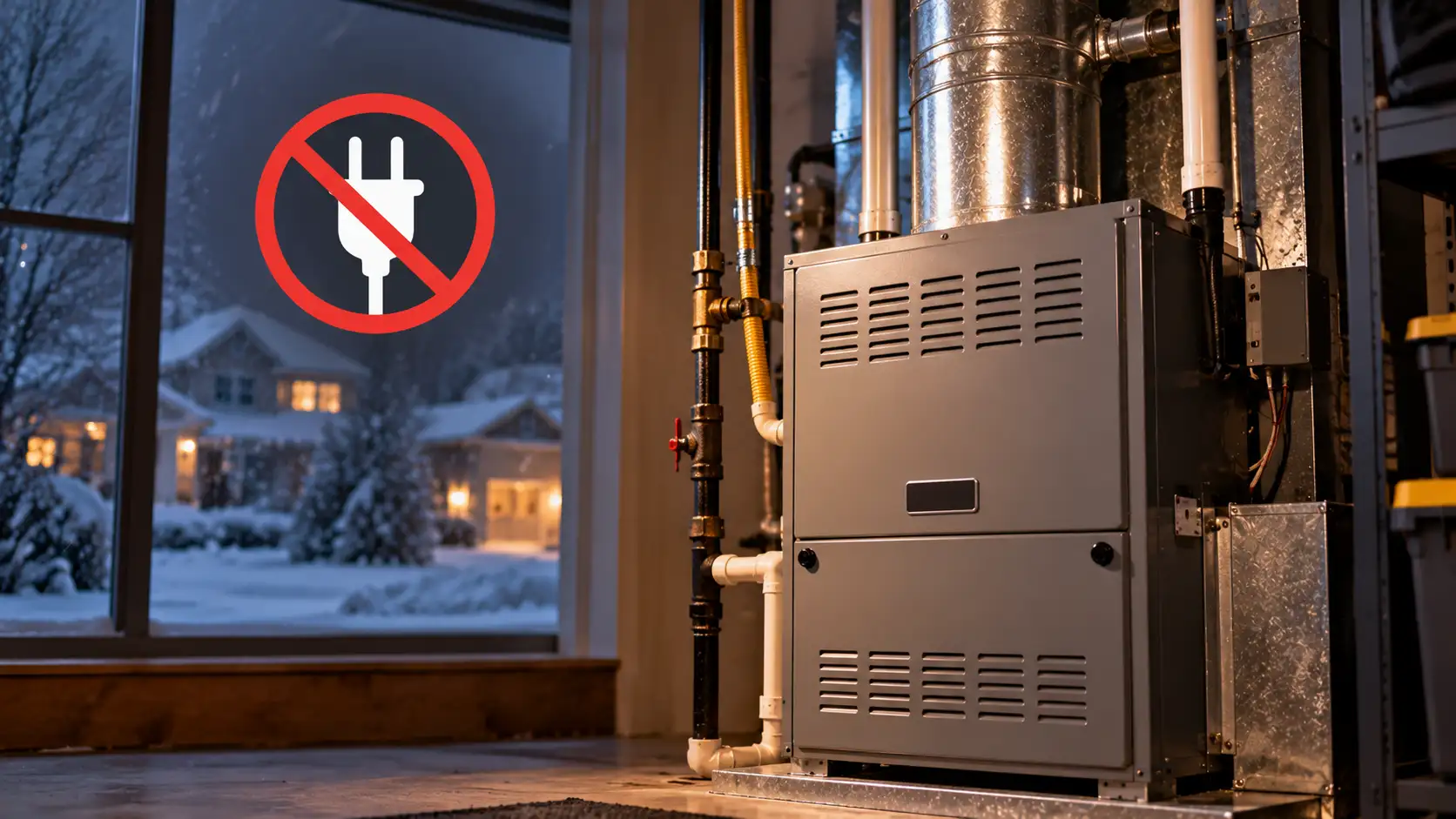
When a winter storm causes a power outage, keeping your home warm becomes a major concern. If your home has a gas furnace, you might assume it will continue working because it runs on natural gas instead of electricity.
However, most modern gas furnaces will not work during a power outage.
Although natural gas produces the heat, your furnace still needs electricity to operate several important components.
Here’s why your gas furnace needs power, what happens when the electricity goes out, and how you can prepare for unexpected outages.
A gas furnace uses natural gas or propane to generate heat, but several parts of the system depend on electricity.
These include:
Without electricity, these components cannot function properly, preventing most modern gas furnaces from heating your home.
When your home loses electricity, your gas furnace will typically shut down automatically.
Even if natural gas is still available, the furnace cannot complete its normal heating cycle without electrical power.
You may notice that:
This is normal for most modern gas furnaces and doesn’t necessarily mean something is broken.
Some older gas heating systems operate differently from modern furnaces.
For example, certain older gas heaters use standing pilot lights instead of electronic ignition systems.
However, having a standing pilot light doesn’t mean your furnace can heat your home without electricity.
Most forced-air furnaces still require electrical power to run their blower fans.
Some specially designed gravity furnaces and gas wall heaters may operate without electricity, but this depends on the specific equipment.
Always check your heating system’s manufacturer instructions before assuming it can operate during an outage.
Yes, a properly sized and installed backup generator may allow your gas furnace to operate during a power outage.
However, the generator must provide enough power for the furnace’s electrical components, including the blower motor and ignition system.
A standby generator can automatically provide backup electricity when utility power fails.
When properly installed and sized, it may keep essential equipment, including your heating system, running during an outage.
Some portable generators can also power compatible gas furnaces.
However, connecting a furnace to a portable generator requires an appropriate, professionally installed electrical connection.
Important: Never connect a generator directly to a household outlet or attempt to backfeed electricity into your home’s wiring.
A licensed electrician can help determine the safest backup power setup for your home.
If your gas furnace stops working during a power outage, there are several ways to help your home retain warmth.
Avoid opening exterior doors unnecessarily. Keeping them closed helps prevent warm indoor air from escaping.
Closing curtains at night can help reduce heat loss through windows.
Dress in layers and use blankets to stay comfortable while waiting for electricity to return.
Gathering in a smaller, comfortable room can make it easier to stay warm without heating the entire house.
Do not use your gas stove, oven, outdoor grill, or camping equipment to heat your home.
These appliances can create serious fire and carbon monoxide hazards when used incorrectly.
Make sure your home has working carbon monoxide detectors with battery backup.
If indoor temperatures become dangerously cold, consider staying somewhere with reliable heating.
In most cases, a modern gas furnace will restart automatically once electricity is restored.
However, some systems may require a few minutes to complete their normal startup process.
If your furnace doesn’t turn back on, try these simple checks:
If the furnace still doesn’t work, contact an HVAC professional.
Avoid repeatedly resetting a circuit breaker or attempting electrical repairs yourself.
Power outages can happen unexpectedly, especially during severe weather.
Preparing your heating system ahead of time can help reduce disruptions.
Consider scheduling furnace maintenance before winter to make sure your heating equipment is operating properly.
You may also want to discuss backup power options with a licensed electrician, particularly if your home frequently experiences outages.
A professional can evaluate your electrical system and determine whether a generator or another backup power solution is appropriate.
If your gas furnace doesn’t restart after electricity returns, the problem may involve more than the outage itself.
Common issues include electrical faults, damaged control components, ignition problems, or a tripped safety switch.
An HVAC technician can inspect your heating system, identify the cause, and recommend the appropriate repairs.
If you smell gas, leave the area immediately and contact your gas utility or emergency services from a safe location.
While gas furnaces use natural gas to produce heat, most still rely on electricity to operate.
At Apex Electrical & AC, we help homeowners in New Braunfels, TX, and surrounding communities, including Seguin, San Marcos, and Schertz, with residential heating and electrical services.
Whether your furnace isn’t working properly, you’re experiencing electrical problems, or you want to prepare your home for winter, our team can help.
Contact Apex Electrical & AC today to schedule heating or electrical service and keep your home comfortable this winter.