


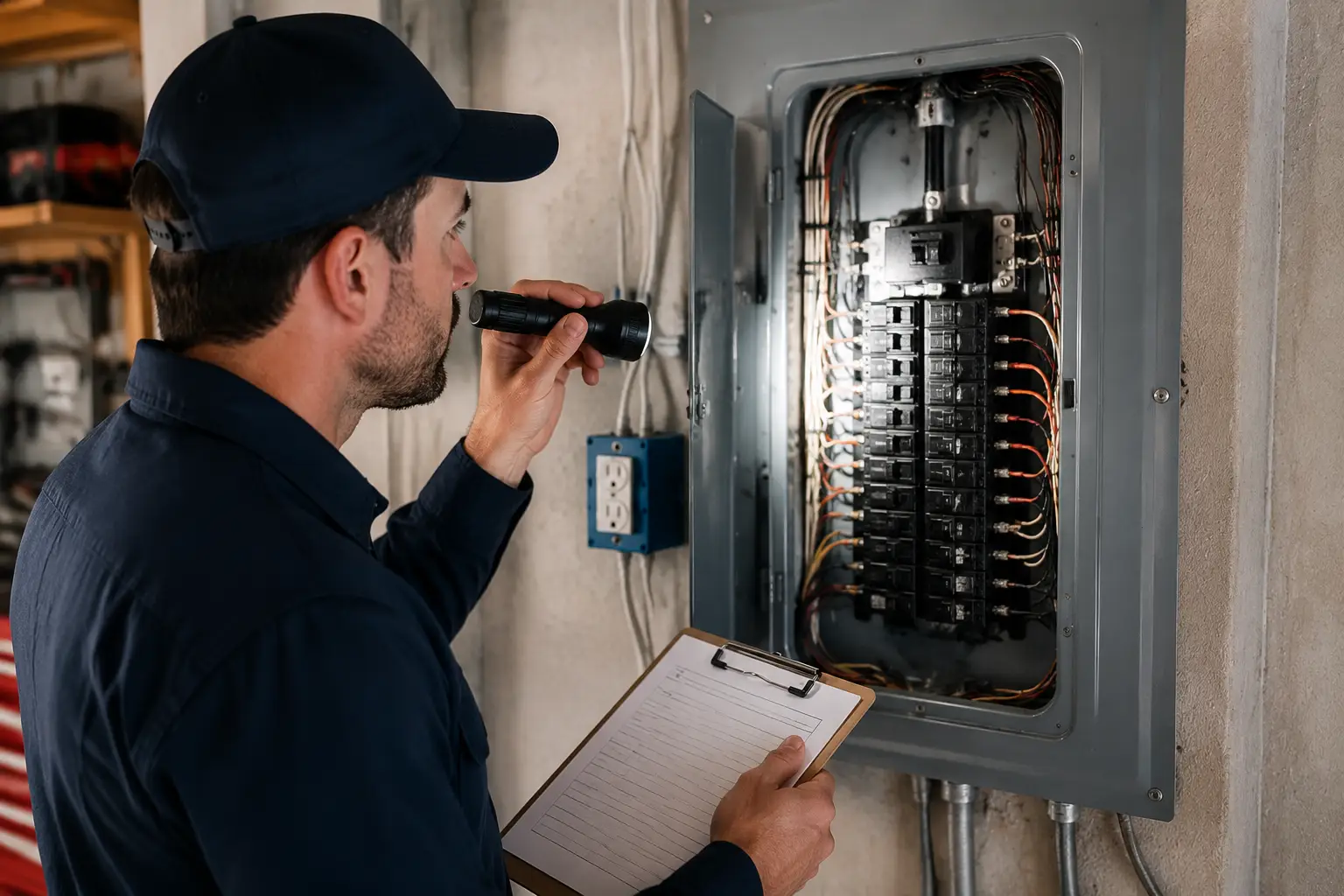
Electricity powers almost every part of a modern home, from lighting and appliances to HVAC systems, smart devices, and entertainment equipment. While electrical systems are designed to provide reliable power, problems caused by aging components, overloaded circuits, or damaged wiring can create safety risks.
For Texas homeowners, regular electrical inspections are especially important because homes continue to add more high-power equipment, including air conditioning systems, electric vehicles, and modern appliances.
A simple electrical safety check can help identify potential issues early, improve reliability, and prevent costly repairs or dangerous situations.
Here are 10 important electrical items every Texas homeowner should inspect.
Your electrical panel is the center of your home’s electrical system. It distributes electricity to different circuits throughout your property.
Homeowners should regularly inspect the panel for signs of problems, including:
A properly functioning electrical panel should operate quietly and should never feel hot.
If your home still has an older electrical panel, it may not be designed to handle today’s electrical demands.
Circuit breakers are designed to protect your home by shutting off power when a circuit becomes overloaded.
Occasional trips can happen, but frequent breaker trips may indicate:
If you are constantly resetting breakers, it is important to have your electrical system inspected by a professional.
Lights that flicker or dim unexpectedly can be a warning sign of electrical issues.
Common causes include:
Pay attention if lights dim when major appliances turn on, such as:
These signs may indicate that your electrical system is struggling with demand.
Electrical outlets and switches should be checked regularly for signs of wear or damage.
Look for:
Damaged outlets should not be ignored because they can create safety hazards.
Ground Fault Circuit Interrupter (GFCI) outlets are designed to protect homeowners from electrical shocks, especially in areas where water is present.
GFCI outlets are commonly found in:
Homeowners should test these outlets regularly using the test and reset buttons.
If a GFCI outlet does not work properly, it should be replaced.
Extension cords are useful for temporary power needs, but they should not replace permanent electrical solutions.
Using too many extension cords can create risks such as:
If your home requires frequent extension cords or power strips, you may need additional outlets or dedicated circuits installed.
Older homes may have outdated wiring that cannot safely support modern electrical demands.
Warning signs of wiring problems include:
Homes with older wiring may require professional evaluation to ensure they can safely support current electrical usage.
Texas homeowners should also inspect outdoor electrical equipment, especially because weather conditions can affect exterior components.
Check:
Make sure outdoor electrical connections are properly protected from moisture and weather exposure.
Modern homes use significantly more electricity than homes built decades ago.
Today’s homeowners often add:
If you are planning upgrades, your electrical system should be evaluated to ensure it can safely handle the additional demand.
A panel upgrade or additional circuits may be needed in some homes.
Electrical safety also includes protecting your home from unexpected events.
Homeowners should:
Power surges caused by storms or electrical issues can damage expensive equipment and appliances.
Texas homeowners often rely heavily on electrical systems because of:
Regular inspections can help identify problems before they become emergencies.
Benefits of electrical inspections include:
You should schedule professional electrical service if you notice:
Electrical problems can become dangerous quickly, so professional evaluation is recommended when warning signs appear.
At Apex Electrical & AC, we help Texas homeowners maintain safe and reliable electrical systems through professional inspections, repairs, panel upgrades, and installation services.
Our experienced electricians can evaluate your home’s electrical system, identify potential concerns, and recommend solutions designed for modern energy needs.
Whether you are experiencing electrical problems or simply want to ensure your home is safe, a professional inspection can help protect your property and family.
Electrical safety starts with regular awareness and inspections. Small issues like flickering lights, damaged outlets, or frequent breaker trips can become larger problems if ignored.
By checking your electrical panel, outlets, wiring, and overall system capacity, you can help maintain a safer and more reliable home.
For Texas homeowners, regular electrical inspections are an important part of protecting your property, improving efficiency, and preparing your home for future electrical needs.