


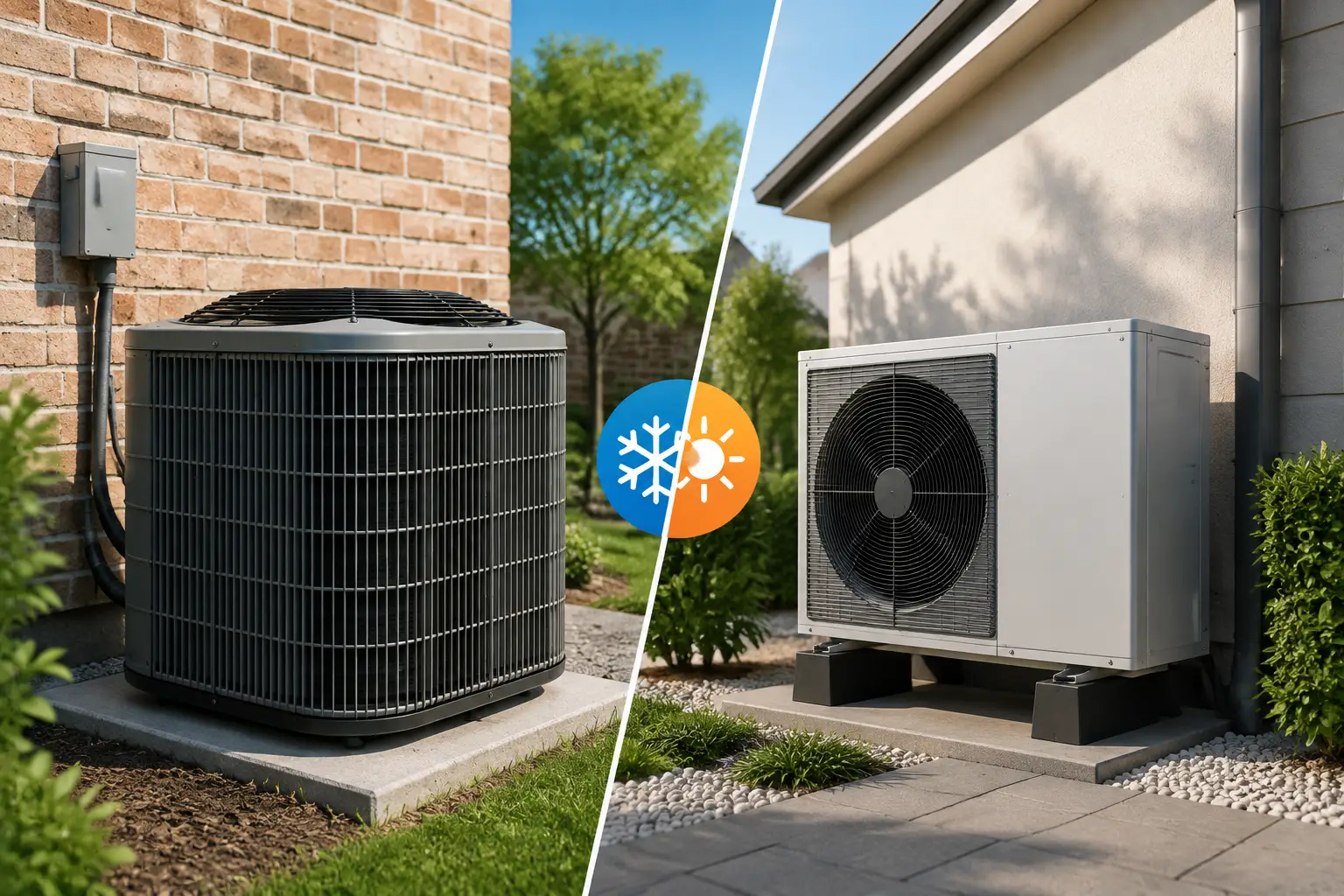
Texas homeowners rely heavily on their cooling systems to stay comfortable during long, hot summers. With rising energy costs and growing interest in energy-efficient home upgrades, many homeowners are exploring whether a traditional air conditioner or a heat pump system is the better choice.
Both systems can provide reliable cooling, but they work differently and offer unique advantages depending on your home, energy goals, and comfort needs.
Understanding the differences between heat pumps and traditional AC systems can help you make an informed decision when replacing or upgrading your HVAC system.
A traditional air conditioning system is designed specifically to cool your home. It works by transferring heat from inside your house to the outdoors using refrigerant, an indoor evaporator coil, and an outdoor condenser unit.
Most traditional AC systems are paired with a furnace for heating during colder months. The AC handles cooling, while the furnace provides heat.
Traditional AC systems remain one of the most common cooling solutions in Texas homes because they are built to handle high temperatures and heavy summer demand.
A heat pump is an HVAC system that can both cool and heat your home using the same equipment. Instead of generating heat through combustion like a furnace, a heat pump transfers heat from one location to another.
During summer, a heat pump works similarly to an air conditioner by removing heat from inside your home and releasing it outdoors.
During colder months, it reverses operation and pulls heat from the outside air to warm your home.
Heat pumps have become increasingly popular as homeowners look for more efficient and environmentally friendly HVAC options.
Texas summers can bring extreme temperatures, often pushing HVAC systems to their limits.
Traditional AC systems are specifically designed for cooling and have been widely used in hot climates for decades. High-efficiency AC units can provide excellent cooling performance even during the hottest months.
Modern heat pumps can also cool effectively, especially newer models designed for warmer climates. However, proper sizing and installation are critical to ensure reliable performance.
For Texas homes where cooling is the main priority, both systems can perform well when installed correctly.
Energy efficiency is one of the biggest differences between these systems.
Traditional AC systems remove heat from your home but require a separate heating system, such as a furnace, during colder months.
Heat pumps provide both heating and cooling by moving heat instead of creating it, which can make them more energy efficient in many situations.
Homeowners interested in reducing energy consumption may find heat pumps appealing because one system handles multiple comfort needs.
The upfront cost of a new HVAC system is an important factor for many homeowners.
Traditional AC systems may have lower installation costs, especially if your home already has a compatible furnace.
Heat pumps can sometimes have higher upfront costs because they replace both cooling and heating equipment. However, energy savings over time may help offset the initial investment.
A professional HVAC evaluation can help determine which option makes the most financial sense for your home.
One major advantage of heat pumps is their ability to provide heating and cooling in one system.
Traditional AC systems require another heating source, usually a furnace.
For homeowners replacing both an aging AC unit and heating system, a heat pump can be an efficient alternative.
However, homes with existing high-efficiency furnaces may still benefit from keeping a traditional HVAC setup.
Heat pumps can be a great option for many Texas homeowners, especially those looking for:
Texas has a climate where heat pumps can perform well because winters are generally mild compared to colder regions.
However, factors such as home size, insulation, existing HVAC equipment, and personal comfort preferences should be considered before making a decision.
A traditional AC system may be the right choice if:
Many Texas homeowners continue choosing traditional AC systems because they provide dependable cooling performance during extreme summer temperatures.
Before upgrading your HVAC system, consider:
A properly sized system is essential for comfort and efficiency. An incorrectly sized unit may run constantly or struggle to maintain temperatures.
Even the best HVAC system cannot perform efficiently if your home has air leaks or poor insulation.
If reducing energy consumption is a priority, a heat pump may offer advantages.
Replacing only your AC system versus upgrading your entire HVAC setup can significantly impact your options.
Choosing between a heat pump and traditional AC system depends on your home’s unique needs. Proper installation, system sizing, and setup are just as important as selecting the right equipment.
At Apex Electrical & AC, we help Texas homeowners evaluate their cooling options and install reliable HVAC systems designed for comfort, efficiency, and long-term performance.
Whether you need AC replacement, heat pump installation, or expert HVAC advice, our team can help you choose the right solution for your home.
Both heat pumps and traditional AC systems can provide effective cooling for Texas homes. Traditional AC systems remain a reliable choice for homeowners focused primarily on cooling performance, while heat pumps offer the advantage of combining heating and cooling in one energy-efficient system.
The best choice depends on your home, budget, existing equipment, and long-term energy goals. Working with an experienced HVAC professional ensures you select a system that keeps your home comfortable through Texas summers and beyond.