


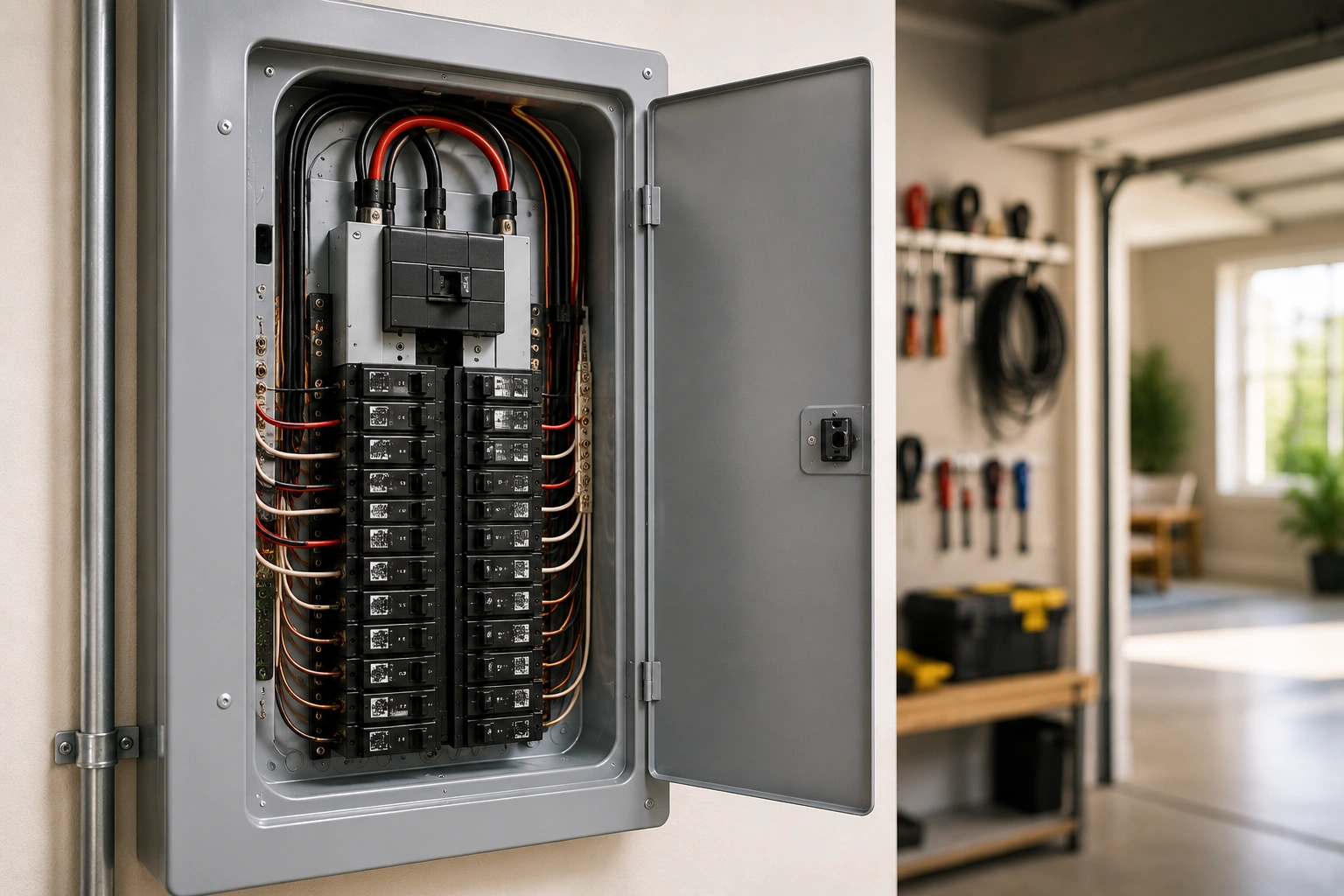
Your electrical panel is the heart of your home’s electrical system. It distributes electricity to every outlet, light fixture, appliance, and major system throughout the house. As homes continue to add more electrical devices, many older panels struggle to keep up with today’s power demands.
If you’re considering an electrical panel upgrade, one of the first questions you probably have is, “How much will it cost?” While there’s no one-size-fits-all answer, understanding the factors that influence pricing can help you plan for the project and make informed decisions.
An electrical panel upgrade involves replacing your existing breaker panel with one that has a higher electrical capacity or improved safety features.
Depending on your home’s needs, the upgrade may include:
The scope of work varies from one home to another, which is why costs can differ significantly.
Several factors influence the overall cost of upgrading an electrical panel.
Homes with older 60-amp or 100-amp panels often require upgrades to 200-amp service to support modern electrical demands. Larger service upgrades generally require more materials and labor.
The size of the new panel depends on your home’s electrical usage.
For example, homeowners adding an EV charger, hot tub, workshop equipment, or a larger HVAC system may need additional electrical capacity compared to a home with standard electrical demands.
During the upgrade, an electrician may discover outdated or damaged wiring that should be repaired or replaced for safety reasons.
Addressing these issues during the project can affect the overall cost but helps ensure the electrical system operates safely.
Many municipalities require permits and inspections for electrical panel upgrades.
Permit fees vary by location, and inspections help verify that the installation complies with current electrical codes.
Panels located in easily accessible areas are generally simpler to replace.
If the electrical panel is located in a difficult-to-reach location or requires additional work to meet code requirements, installation time may increase.
Some homeowners choose to complete other electrical improvements during the panel upgrade, such as:
Completing these upgrades at the same time can often be more convenient than scheduling separate electrical projects later.
An older panel doesn’t always need immediate replacement, but several warning signs may indicate it’s time for an inspection.
These include:
A licensed electrician can determine whether an upgrade is necessary based on your home’s current and future electrical needs.
For many homeowners, upgrading the electrical panel is an investment in both safety and functionality.
Benefits may include:
An upgraded panel can also make future electrical projects easier and help your home keep pace with changing energy demands.
Electrical panel upgrades involve working with high-voltage electrical systems and should always be performed by a licensed electrician.
Professional installation helps ensure:
Attempting to modify an electrical panel without proper training can create serious safety hazards.
Whether you’re adding new appliances, planning for an EV charger, or simply need more electrical capacity, Apex Electrical, AC & Heating can help. Our licensed electricians can inspect your current electrical system, recommend the right panel upgrade, and complete the installation safely and in compliance with local codes. Contact us today to schedule an electrical evaluation.