


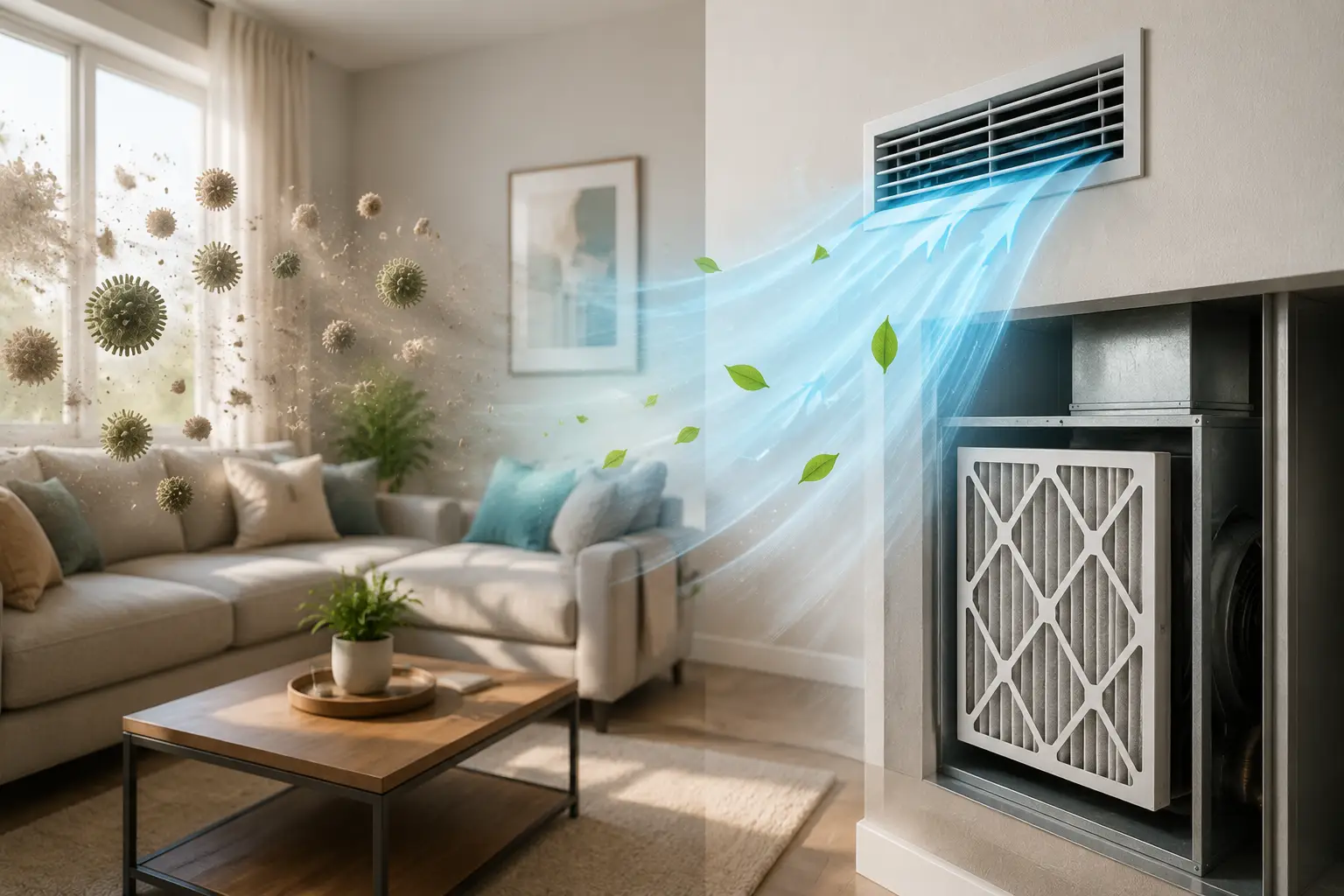
Most people think of air pollution as something that happens outdoors, but the air inside your home can also contain dust, allergens, pet dander, odors, excess humidity, and other airborne particles. Because Texas homeowners spend a large amount of time indoors, indoor air quality can have a major impact on comfort and overall home conditions.
Your HVAC system plays an important role in circulating and filtering indoor air. When it is properly maintained and equipped with the right filtration and air-quality solutions, it can help reduce airborne contaminants and create a cleaner, more comfortable indoor environment.
Indoor air quality, often called IAQ, refers to the condition of the air inside your home.
Poor indoor air quality can be influenced by several factors, including:
In tightly sealed modern homes, these pollutants can sometimes remain trapped indoors instead of naturally escaping.
Indoor air-quality problems are not always easy to notice. Some signs can be mistaken for normal household conditions.
You may have poor indoor air quality if you notice:
If these issues continue even after regular cleaning, your HVAC system may need attention.
If your HVAC filtration system is not working effectively, dust can circulate through your ductwork and settle on furniture, floors, and other surfaces.
A dirty or low-quality air filter can make this problem worse.
Replacing filters regularly can help reduce airborne particles before they circulate throughout your home.
Texas weather can bring periods of high humidity, especially during warmer months.
Your air conditioner helps remove moisture from indoor air while cooling your home. However, an improperly sized or poorly performing AC system may not control humidity effectively.
Excess moisture can lead to:
Proper HVAC operation is an important part of maintaining balanced indoor humidity.
Persistent indoor odors can sometimes come from the HVAC system itself.
Dust buildup, dirty filters, moisture inside ductwork, or biological growth around cooling components can contribute to unpleasant smells.
Routine HVAC inspections can help identify the source instead of simply covering the odor with air fresheners.
A home may feel stuffy when air is not circulating properly.
Restricted airflow can be caused by:
Good circulation helps distribute conditioned and filtered air more evenly throughout your home.
Your heating and cooling system does much more than control temperature. With proper maintenance and the right upgrades, it can also help improve air quality.
Your air filter is one of your HVAC system’s first lines of defense against airborne particles.
Filters can capture:
However, not every HVAC system is designed to handle very high-efficiency filters. A filter that is too restrictive can reduce airflow.
An HVAC professional can recommend a filtration option that provides effective filtering without affecting system performance.
Even a good air filter cannot perform properly when it becomes clogged.
During heavy AC usage in Texas, homeowners should check their filters regularly. Homes with pets, allergies, construction nearby, or high dust levels may require more frequent replacement.
A clean filter can help improve both air quality and HVAC efficiency.
For homeowners who want additional filtration, whole-home air-quality systems may provide another layer of protection.
Depending on the system, these solutions may help reduce smaller airborne particles and contaminants that standard filters may not capture.
Whole-home options can include:
The right solution depends on your home’s HVAC design and indoor air-quality concerns.
Dust and debris can collect on coils, blower components, and other parts of the HVAC system.
When these areas become dirty, airflow and efficiency may decline.
Professional HVAC maintenance typically includes inspecting important components and identifying buildup or performance issues before they become larger problems.
Your home’s ductwork carries conditioned air to different rooms.
Damaged, leaking, or poorly sealed ducts can allow dust and contaminants to enter the system while also wasting cooled air.
Common ductwork problems include:
A professional inspection can help determine whether your ductwork is contributing to comfort or air-quality issues.
Indoor air quality and HVAC performance are closely connected.
Restricted airflow, dirty filters, clogged components, and duct leaks can affect both the cleanliness of your indoor air and the efficiency of your HVAC system.
Keeping your system properly maintained can help:
This means indoor air-quality improvements can benefit both comfort and overall system performance.
Consider scheduling an HVAC inspection if you notice:
A professional can inspect your HVAC equipment, filtration, airflow, and ductwork to identify possible causes.
At Apex Electrical & AC, we help Texas homeowners improve indoor comfort through professional HVAC maintenance, repair, and indoor air-quality solutions.
Whether you are dealing with excessive dust, humidity problems, poor airflow, or outdated filtration, our team can evaluate your system and recommend practical improvements for your home.
Poor indoor air quality can affect your home’s comfort, cleanliness, and HVAC performance. Dust, allergens, humidity, odors, and poor ventilation can build up indoors when your heating and cooling system is not filtering or circulating air effectively.
Regular HVAC maintenance, clean filters, proper airflow, and suitable air-quality upgrades can help create a cleaner and more comfortable home.
If your home feels dusty, humid, or stuffy even when your HVAC system is running, a professional inspection can help determine what is causing the problem and what improvements may help.