


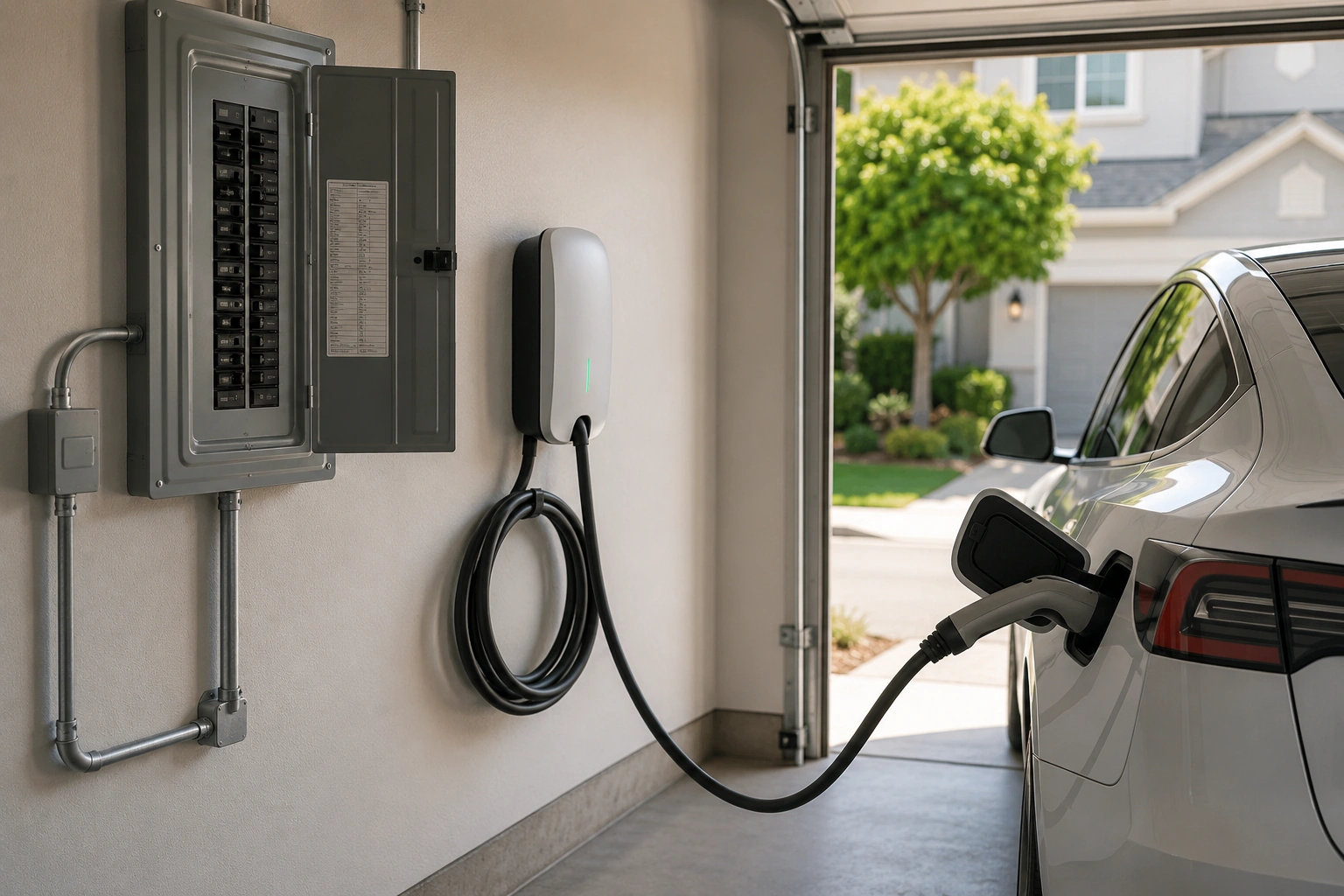
Electric vehicles (EVs) are becoming more common, and many homeowners are choosing to install charging stations at home for added convenience. Charging your vehicle overnight means you can start each day with a full battery without relying on public charging stations. However, before installing a home EV charger, it’s important to know whether your home’s electrical system can safely handle the additional power demand.
The good news is that many homes can support an EV charger with little or no modification. Others may require an electrical panel upgrade or a dedicated circuit to ensure safe and reliable operation.
Unlike standard household appliances, Level 2 EV chargers draw a significant amount of electricity for several hours at a time. Your home’s electrical system must have enough available capacity to power the charger alongside your air conditioner, kitchen appliances, lighting, and other electrical devices.
An electrician can evaluate your home’s electrical system to determine whether it can safely support an EV charger without overloading the panel.
One of the first things to consider is your electrical panel.
Most modern homes have either a 100-amp, 150-amp, or 200-amp service panel. While some 100-amp panels can support EV charging, larger homes with high electrical usage may already be close to their maximum capacity.
During an inspection, an electrician will evaluate:
If your panel doesn’t have enough available capacity, an electrical panel upgrade may be recommended.
A Level 2 EV charger requires its own dedicated circuit. This means the charger cannot safely share a circuit with other outlets or appliances.
Depending on the charger model, a dedicated 240-volt circuit is typically required.
If your electrical panel has available space, installing a dedicated breaker is often straightforward. If not, additional electrical work may be needed before the charger can be installed.
Every home uses electricity differently. Homes with multiple air conditioning systems, electric water heaters, pools, workshops, or large appliances often place a greater demand on the electrical system.
An electrician may perform a load calculation to determine whether your existing electrical service can safely handle an EV charger while all of your other electrical equipment is operating.
This helps prevent overloaded circuits and ensures reliable performance.
There are two common charging options for homeowners.
Level 1 charging uses a standard 120-volt outlet. It requires no special installation but charges much more slowly, often taking more than a full day to recharge a battery.
This option works well for drivers with shorter daily commutes.
Level 2 chargers operate on a 240-volt circuit and can charge most electric vehicles several times faster than a standard outlet.
While installation requires professional electrical work, most homeowners find the added convenience well worth the investment.
The charger should be installed in a location that is both convenient and practical.
Common installation locations include:
The distance between your electrical panel and the charger location can affect installation complexity and cost, as longer wiring runs require additional materials and labor.
In many areas, installing a Level 2 EV charger requires electrical permits and inspections to ensure the installation meets current electrical codes.
Working with a licensed electrician helps ensure your installation is completed safely and complies with local requirements.
You may benefit from an electrical upgrade before installing an EV charger if you notice:
Addressing these issues before installing an EV charger helps improve both safety and long-term reliability.
If you’re considering adding a home EV charger, the licensed electricians at Apex Electrical, AC & Heating can evaluate your electrical system, recommend the right charging solution, and perform a safe, code-compliant installation. Contact us today to schedule an electrical assessment and prepare your home for convenient EV charging.