


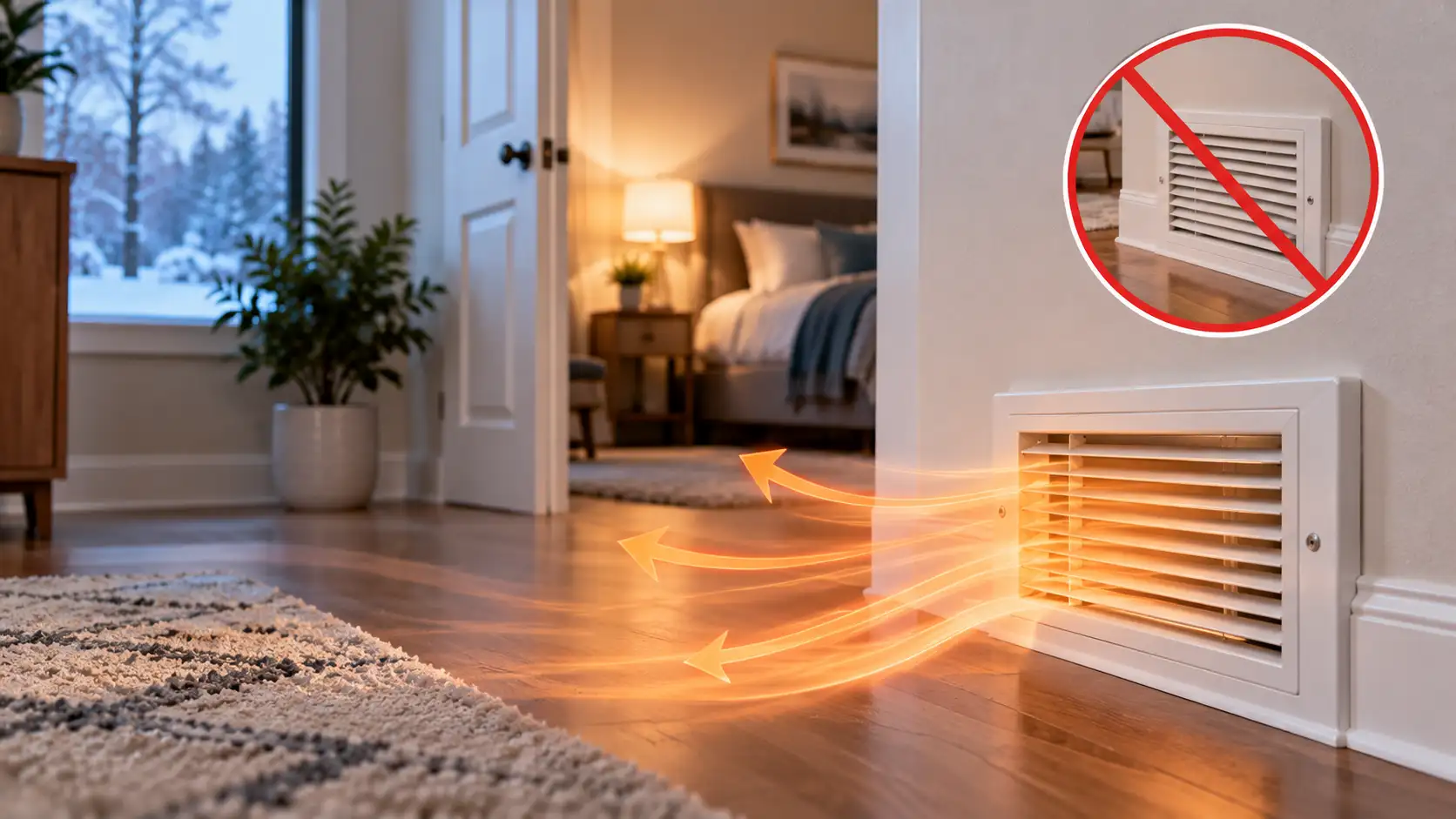
When winter temperatures drop in Texas, homeowners often look for ways to reduce heating costs. One common idea is closing air vents in unused rooms to direct more warm air into the areas they use most.
It sounds like a simple way to save energy, but closing air vents can actually make your heating system less efficient and potentially cause HVAC problems.
Before closing vents in your guest bedroom or spare room, here’s what you should know about how it affects your home’s heating system.
In most homes, closing air vents does not reduce heating costs.
Your central heating system is designed to distribute warm air throughout your home using a connected network of ducts. Closing vents doesn’t automatically reduce the amount of heat your furnace or heat pump produces.
Instead, it restricts airflow and can increase pressure inside your ductwork.
This may cause your heating system to operate less efficiently, potentially increasing energy consumption rather than reducing it.
Closing one vent slightly may not cause noticeable problems. However, shutting several vents completely can affect how your heating system operates.
Your HVAC system needs proper airflow to work efficiently.
When multiple vents are closed, air has fewer places to escape. This increases pressure inside the ductwork and may put additional strain on your system.
Closing vents doesn’t guarantee that more warm air will reach other rooms.
Instead, some areas may become too warm while others remain uncomfortable. You might also notice that your heating system struggles to maintain a consistent temperature.
Restricted airflow can affect your furnace or heat pump.
For example, insufficient airflow through a furnace may cause overheating and trigger its safety controls. Over time, repeated airflow problems can contribute to equipment wear and unexpected repairs.
If your ductwork has small leaks, increased air pressure may push more heated air through those openings.
This means some of the warmth you’re paying for could escape into your attic or other unconditioned spaces instead of reaching your living areas.
For most homes with central forced-air heating, keeping supply vents open is the safest and most efficient approach.
Your HVAC system relies on balanced airflow to distribute heat properly.
You should also avoid blocking return air vents with furniture, rugs, or other household items. Return vents allow air to circulate back through your heating system.
If certain rooms consistently feel too warm or too cold, an HVAC technician can evaluate the airflow and determine whether adjustments are needed.
Instead of closing air vents, consider these practical ways to improve heating efficiency.
Lowering your thermostat when you’re sleeping or away from home can help reduce heating costs.
A programmable or smart thermostat can make temperature adjustments easier without requiring constant manual changes.
A clogged air filter restricts airflow and can reduce HVAC performance.
Check your filter regularly and replace it according to your system manufacturer’s recommendations.
Small gaps around windows, doors, and other openings can allow warm air to escape.
Weatherstripping and sealing these gaps can help maintain a more comfortable indoor temperature.
Proper insulation helps your home retain heat during colder weather.
If certain rooms feel unusually cold, inadequate insulation or air leaks could be contributing to the problem.
Regular heating maintenance helps identify airflow restrictions, dirty components, and other issues that may affect efficiency.
Professional inspections can also help catch developing problems before they lead to expensive repairs.
If you prefer different temperatures in different parts of your home, a professionally designed HVAC zoning system may be worth considering.
Zoning systems use controlled dampers and thermostats to manage heating and cooling in designated areas.
However, not every existing HVAC system is suitable for zoning without modifications.
An HVAC professional can determine whether zoning, ductwork adjustments, or another heating solution would work best for your home.
If your home has uneven heating or airflow problems, closing vents may only make the situation worse.
Consider scheduling an HVAC inspection if you notice:
These problems may indicate airflow restrictions, ductwork issues, or heating equipment that needs attention.
Closing air vents in unused rooms might seem like an easy way to save money, but it can create unnecessary problems for your heating system.
At Apex Electrical & AC, we help homeowners in New Braunfels, TX, and surrounding areas, including Seguin, San Marcos, and Schertz, maintain comfortable and efficient homes.
Whether you’re dealing with uneven heating, poor airflow, or heating system problems, our team can help identify the issue and recommend an appropriate solution.
Contact Apex Electrical & AC today to schedule heating service and keep your home comfortable throughout the winter.