


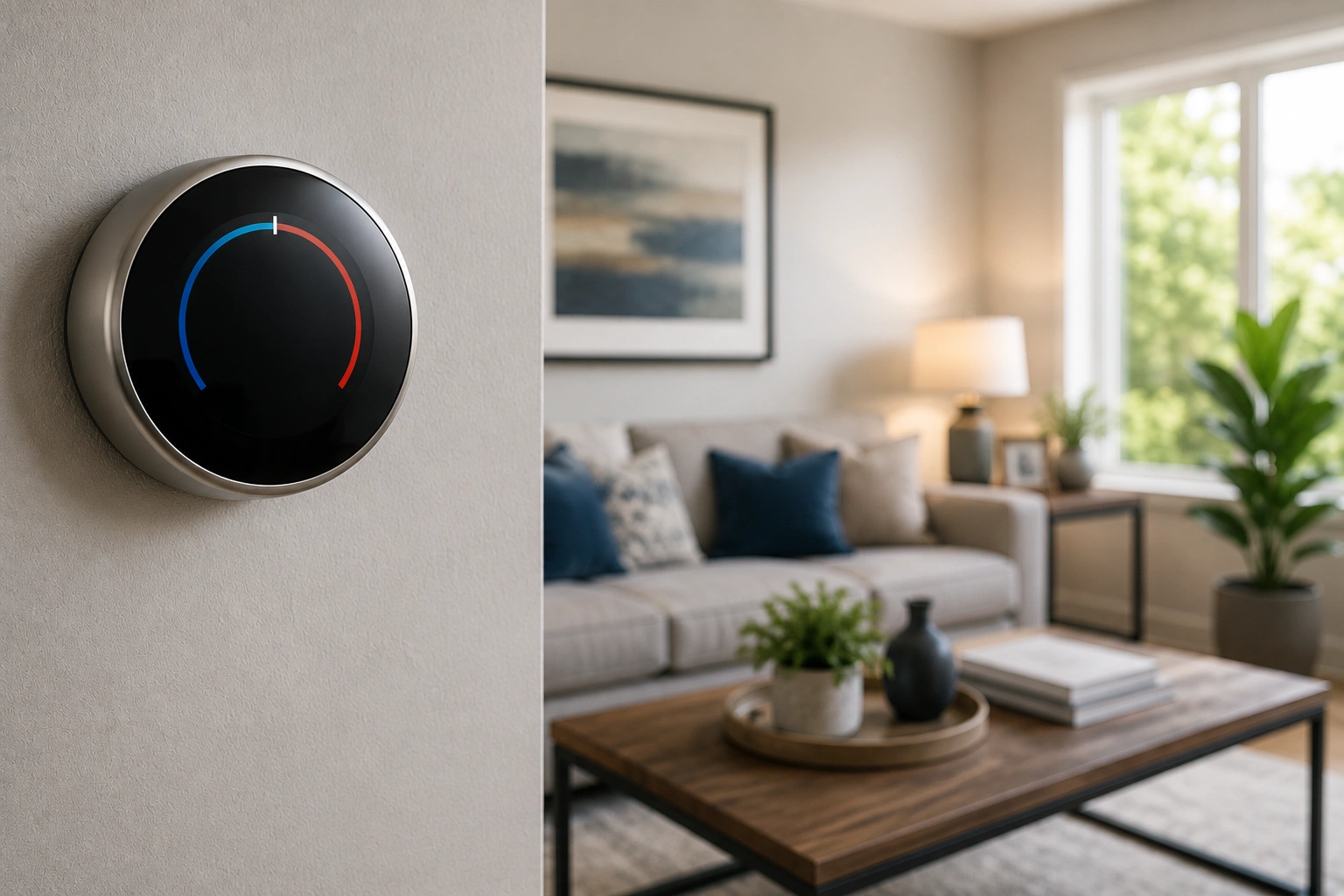
Many homeowners wonder whether it’s better to leave the thermostat at the same temperature all day or adjust it when they’re away from home. Some believe maintaining a constant temperature uses less energy, while others prefer changing the setting throughout the day to reduce utility costs.
The truth is that the best approach depends on your daily routine, the type of thermostat you have, and your home’s insulation. Understanding how your HVAC system works can help you find the right balance between comfort and energy efficiency.
Your thermostat doesn’t make your air conditioner cool faster. Instead, it tells your HVAC system when to turn on and off based on the temperature you select.
Once your home reaches the desired temperature, the system shuts off until the indoor temperature rises above the thermostat setting. Setting the thermostat much lower than necessary won’t cool your home more quickly—it simply keeps the system running longer.
Keeping your thermostat at one temperature all day provides consistent indoor comfort. This approach works well for people who are home most of the day or prefer stable temperatures.
However, if your home is empty for several hours, maintaining the same temperature may cause your air conditioner to run when cooling isn’t needed.
Making small temperature adjustments while you’re away can often reduce energy usage without sacrificing comfort.
If you’re away from home during work or school hours, raising the thermostat a few degrees can help reduce the workload on your air conditioner.
When you return home, you can lower the temperature to a comfortable setting. Although the system will need to cool the home again, it generally uses less energy than maintaining the cooler temperature all day while no one is home.
The same principle applies during cooler months by lowering the thermostat slightly while you’re away if your home uses a heating system.
The ideal thermostat setting varies from household to household, but many homeowners find these general recommendations comfortable:
Rather than making dramatic temperature changes, gradual adjustments often provide the best balance between comfort and energy savings.
A programmable or smart thermostat makes it easy to adjust temperatures automatically throughout the day.
Depending on the model, these thermostats can:
Automating temperature changes helps improve convenience while reducing the need to manually adjust the thermostat.
Many homeowners worry that adjusting the thermostat frequently will damage the air conditioner.
In most cases, normal thermostat adjustments do not harm the HVAC system. Air conditioners are designed to cycle on and off throughout the day as indoor temperatures change.
Problems are more likely to occur if the thermostat is constantly adjusted by large amounts throughout the day, causing unnecessary system cycling. Small, planned adjustments are generally not a concern.
Changing thermostat settings is only one part of reducing cooling costs.
You can also improve HVAC efficiency by:
Together, these simple habits can help reduce the workload on your air conditioner.
If your home never seems to reach the desired temperature, your thermostat may not be the only issue.
A malfunctioning thermostat, poor airflow, refrigerant problems, or other HVAC issues can all affect indoor comfort.
A professional inspection can determine whether your thermostat is operating correctly or if another part of the system requires attention.
If you’re experiencing thermostat issues, inconsistent temperatures, or rising energy bills, Apex Electrical, AC & Heating is here to help. Our experienced HVAC technicians can inspect your system, identify performance issues, and recommend solutions to improve comfort and efficiency. Contact us today to schedule your HVAC service.