


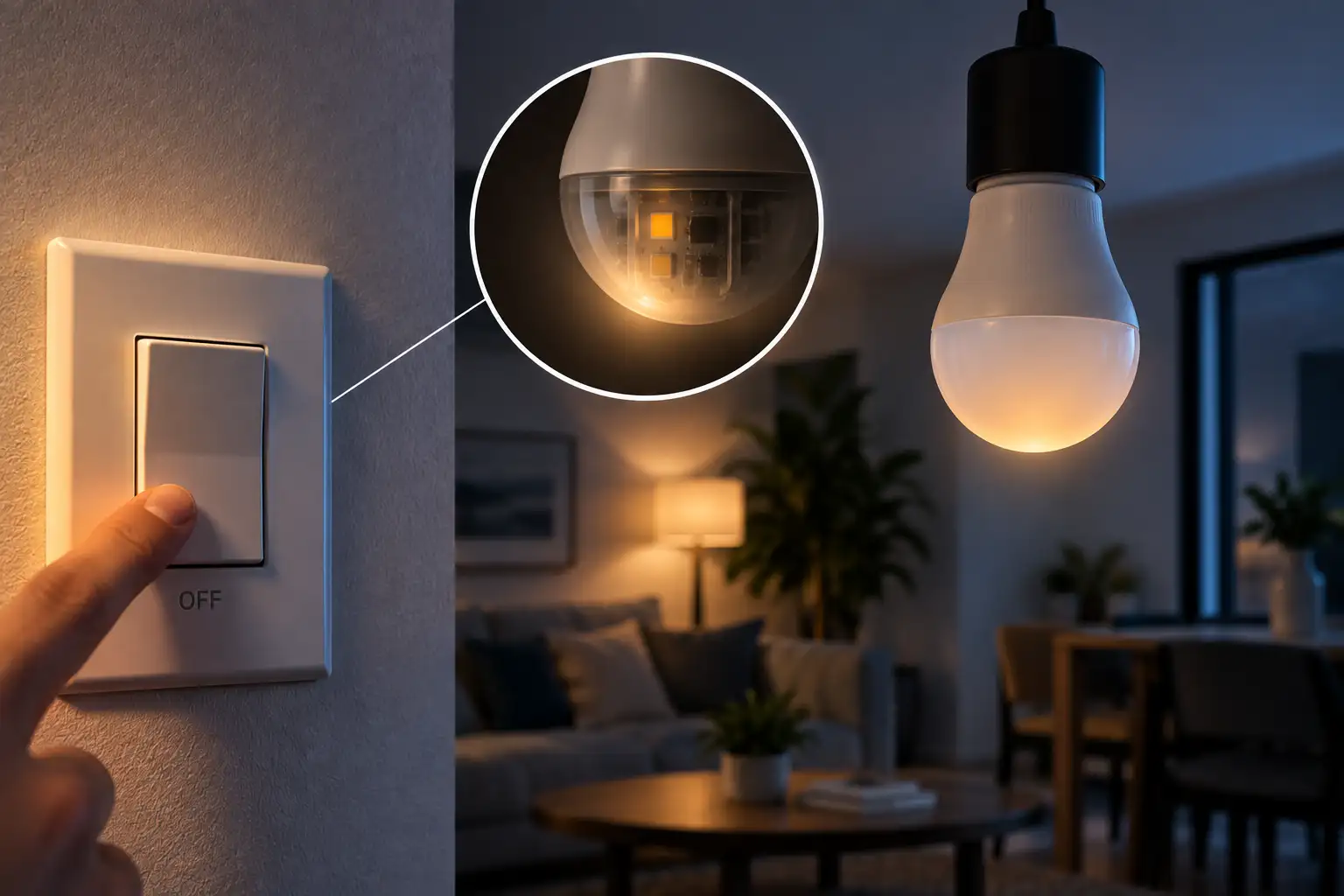
A faint LED glow after switching off is sometimes called ghosting. One possible cause is a small current passing through a lighting control and the lamp. The behavior can depend on the exact LED and dimmer combination, so the glow alone does not identify the cause or confirm that the circuit is safe.
Before buying another pack of bulbs, note when the behavior started and what lighting equipment changed.
Some electronic controls use a small current for their internal circuitry. With certain lamp combinations, that can contribute to a faint glow or occasional flash while the control is off.
Lutron’s technical guidance on LED loads describes this behavior and explains that minimum load requirements depend on the particular lamp and control. Two LED bulbs with similar wattage can behave differently with the same dimmer.
That makes the full model number more useful than a description such as a standard LED bulb. A bulb fitting the socket does not establish compatibility with every lighting control.
Useful observations include whether the light remains faintly on, flashes at intervals, or fades out. Also note whether all lamps controlled by the switch behave the same way.
For example, suppose a chandelier began glowing only after its bulbs were changed. That timing gives the electrician a useful starting point. It does not prove the wiring is sound or that the new bulbs are defective.
If the issue started without any changes, say that too. A clear account of the sequence is more helpful than a confident diagnosis based on an online video.
Keep the bulb packaging, fixture model, and any paperwork for the dimmer or smart switch. Check whether the lamp is described as dimmable and whether the manufacturer provides compatibility guidance for the control.
Do not remove wallplates or expose wiring just to read a hidden model number. An electrician can obtain information that is not accessible safely.
If you are considering a different bulb, give the electrician the proposed model as well as the current one. This can help avoid changing several components at once and losing track of what caused the behavior.
A faint glow without other symptoms still deserves proper identification. If you notice burning odors, unusual heat, discoloration, crackling, or shocks, stop using the affected light and arrange prompt electrical assessment. Smoke or fire requires an emergency response.
Do not assume that an off switch means every part of a fixture or switch box is safe to touch. Troubleshooting inside the circuit belongs with someone qualified to isolate and test it.
Do not add an unapproved resistor, capacitor, or other component behind the switch because an internet comment recommends it. The appropriate solution depends on the control, lamp, fixture, and circuit.
Ask the electrician to explain the confirmed cause and the compatible repair or replacement options. If a replacement is proposed, request the relevant model information so you can choose matching lamps later.
Apex provides indoor lighting services in New Braunfels. When reporting LED afterglow, share what changed, how the light behaves, and any product details you already have.
Does ghosting always mean the bulb is faulty? No. The lamp and control combination may be involved, and inspection may be needed to rule out other causes.
Will any dimmable LED work with my dimmer? Do not assume so. Check compatibility for the specific products rather than relying on the word dimmable alone.