


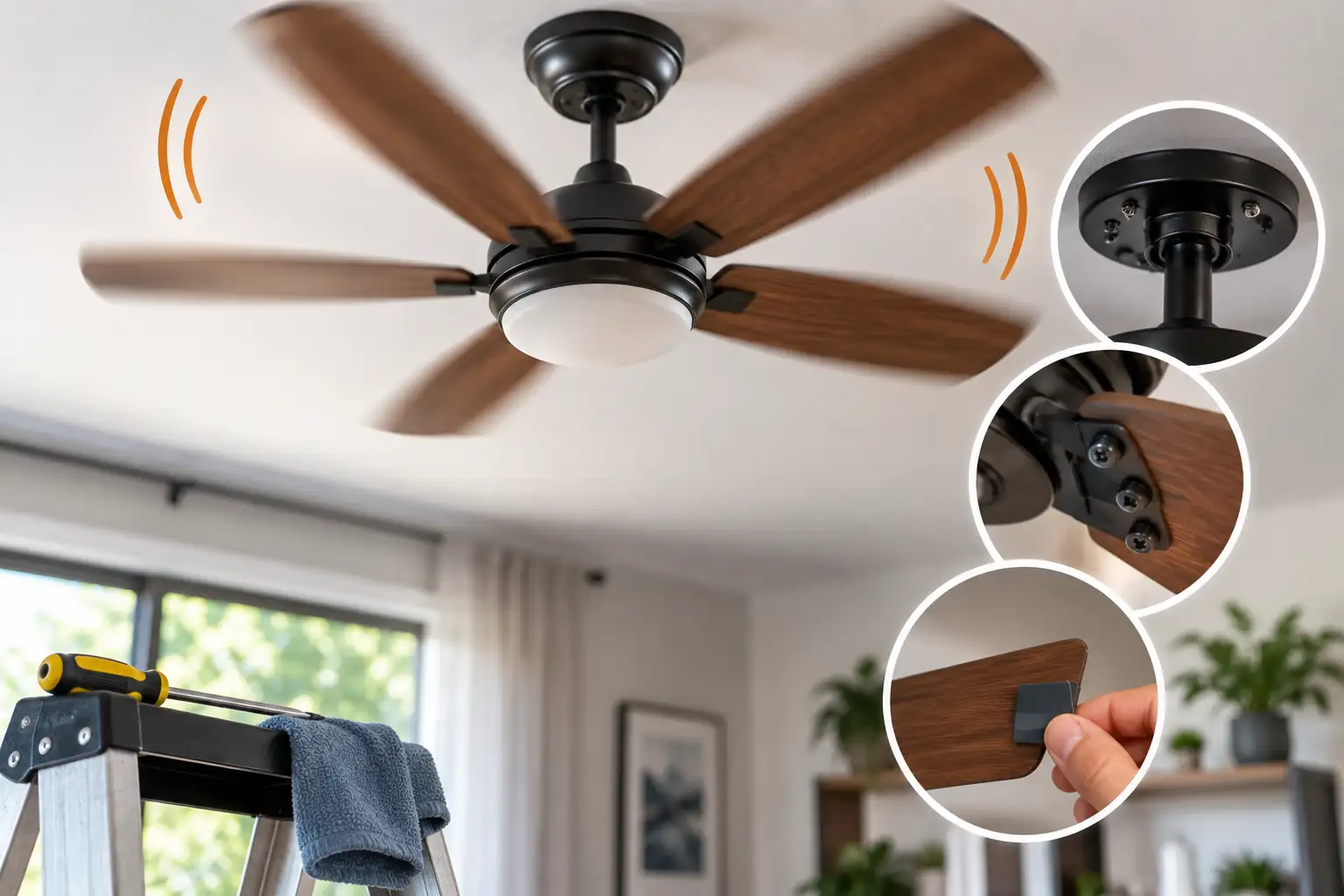
A ceiling fan may wobble because of uneven blade weight, accumulated dust, loose components, damaged blades, or a problem with its mounting. A balancing kit can help with some blade imbalances, but it cannot correct an insecure electrical box or other structural support problem.
The first question is where the movement comes from. Turn off a fan that is shaking strongly, making contact with nearby objects, or showing visible movement at its ceiling attachment.
The blades and the support system need to be considered separately. A blade problem affects how the rotating assembly moves. A mounting problem affects how securely the fixture is attached to the building.
Adding weight to a blade is not a substitute for confirming that the fan is properly supported. A light fixture box should not automatically be assumed suitable for a fan.
Apex’s ceiling fan service information describes checking the support rating and secure installation as part of the work. Those checks require more than watching the fan from below.
Dust may collect unevenly, hardware can loosen, and blades or blade supports can become distorted. Hunter’s fan troubleshooting guide identifies these possibilities and distinguishes blade balancing from damage that requires a different correction.
Do not assume that a fan only needs balancing because it still turns. The same visible symptom can have more than one cause. The fan’s own manual should guide model-specific inspection and permitted maintenance.
Think back to when you first noticed the movement. Did it begin after cleaning, after a blade was bumped, immediately after installation, or without any obvious change?
Also note whether it happens at one speed or several. You do not need to keep running a severely unstable fan to collect more information. Describe what you already observed and leave it off when continued operation appears unsafe.
A short video taken from a safe position before the fan was stopped can be useful if you already have one. Do not restart a loose fixture simply to make a recording.
With the fan stopped and power isolated as the manual directs, look for obvious dirt or visible blade damage. Only perform routine cleaning that you can do safely from a stable position and that the manufacturer permits.
Avoid bending blade brackets, attaching household objects as weights, or opening the ceiling canopy to investigate wiring. If access requires an unsafe ladder position, let a professional handle it.
Keep the model number available. Replacement blades and other components should be appropriate for that fan, rather than selected only because they look similar.
Arrange help if the ceiling connection moves, the fan is newly installed and unstable, a blade is damaged, or the cause remains unclear. Ask for the support, mounting, blade condition, and affected components to be evaluated before a repair is chosen.
For New Braunfels homeowners, Apex offers ceiling fan installation and repair. Explain the movement and any recent changes so the assessment starts with the right information.
Is a balancing kit always the answer? No. It addresses certain imbalances, not every source of movement. Mounting or damaged component issues need the appropriate correction.
Does wobbling mean the entire fan must be replaced? Not automatically. The condition of the fan and its support needs to be established first. A repair recommendation should identify the actual problem.