

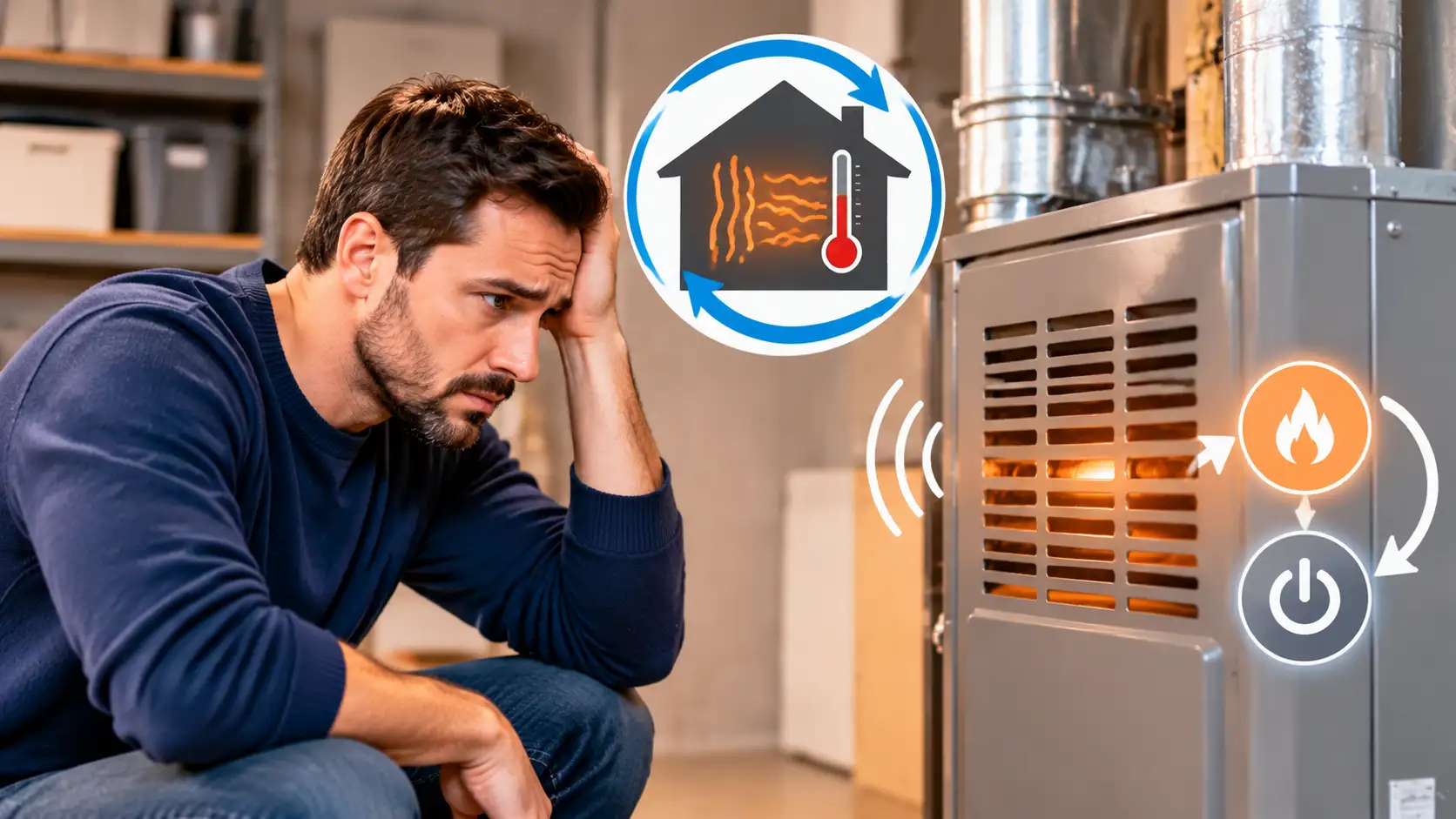
A furnace that repeatedly starts and stops after brief heating periods may be short cycling. Common causes include restricted airflow, overheating, thermostat problems, and equipment faults. A furnace that is too large for the home can also cycle more frequently than it should.
Short cycling can leave rooms uncomfortable, waste energy, and increase wear on heating components. Finding the cause is more useful than repeatedly restarting the furnace.
For New Braunfels homeowners, a few basic observations can help you decide whether the issue needs professional attention.
A furnace normally turns on when your home needs heat and shuts off when the thermostat’s heating demand is satisfied.
Short cycling means it repeatedly runs for unusually short periods. It may stop before the house reaches the desired temperature or heat the area around the thermostat too quickly while other rooms remain uncomfortable.
Cycle length varies with weather, thermostat settings, and furnace type. One short heating cycle does not automatically mean something is wrong. Look for a recurring pattern, especially if it is new or accompanied by uneven heating.
A clogged filter can restrict the air moving through your furnace. Closed supply registers or blocked return grilles can also limit airflow.
When heat cannot move through the system properly, the furnace may overheat. A safety control called the high-limit switch then shuts down the burners. The blower may continue running to cool the equipment.
Your thermostat tells the furnace when heating is needed. Incorrect readings, weak batteries on battery-powered models, or wiring faults can interrupt that process.
Location matters, too. A thermostat exposed to direct sunlight or a nearby heat source may register a warmer temperature than the rest of your home and end the heating cycle early.
On a gas furnace, the flame sensor helps confirm that the burners have lit. If the controls cannot detect a flame, they shut off the gas supply as a safety precaution.
A dirty or faulty sensor can therefore cause the burners to light and shut down shortly afterward. However, ignition, wiring, gas-supply, and control problems can produce similar symptoms. A technician should diagnose the cause before replacing parts.
A furnace with more heating capacity than your home needs may warm the thermostat area quickly and shut off after a short run.
If frequent cycling has occurred since installation, equipment sizing is worth reviewing. A professional heating-load calculation can help determine whether the furnace’s capacity suits your home.
A blocked exhaust vent can interfere with safe furnace operation. A faulty limit switch or another control problem can also interrupt heating.
These issues require professional inspection. The technician needs to determine whether a safety device is responding correctly to a problem or whether the device itself has failed.
If there are no emergency warning signs, start with these basic checks:
Leave burners, wiring, exhaust components, and internal controls to a qualified technician.
If repeated short cycling continues after basic airflow and thermostat checks, turn the heating off at the thermostat and arrange service.
Do not bypass safety switches or repeatedly reset the furnace to force it to run. A shutdown may be protecting the equipment from overheating or another fault.
If you smell gas or rotten eggs, leave immediately without operating switches or using a phone indoors. Call 911 and your gas utility from a safe location outside. If a carbon monoxide alarm sounds, leave the home and call 911; do not reenter until emergency responders give permission.
Apex Electrical, A/C & Heating LLC provides residential heating and furnace services in New Braunfels and surrounding communities.
If your furnace keeps turning on and off, contact Apex to schedule a furnace inspection. We can assess the cause and explain the appropriate next steps.