


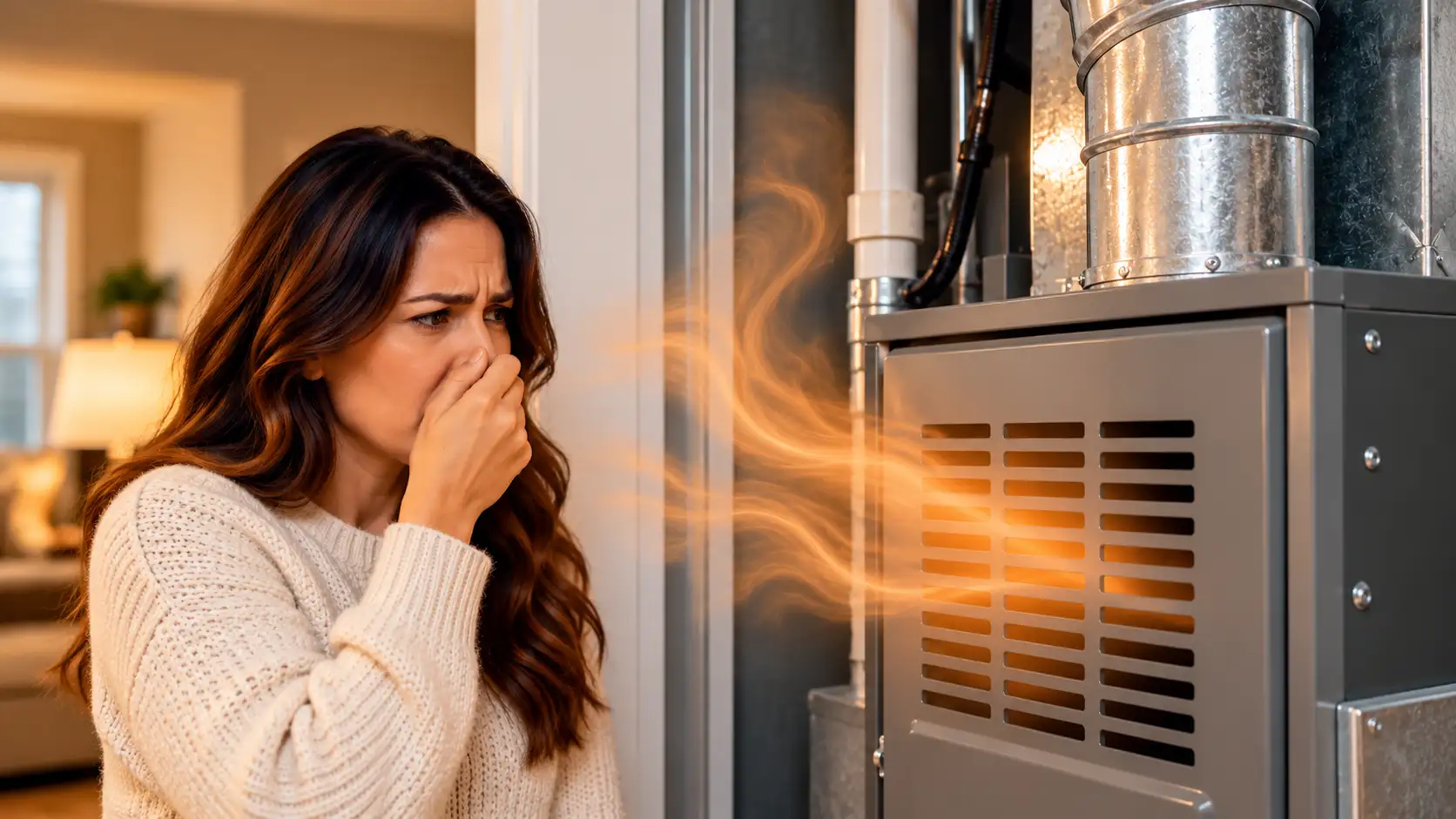
A mild burning smell when you first turn on your heater often comes from dust that has collected on its heating components. As these surfaces warm up, the dust burns off and creates a temporary odor. However, a strong, persistent smell or an odor like melting plastic needs attention.
If you are switching your New Braunfels home from cooling to heating, here is how to understand the smell and decide what to do next.
While your heating system is sitting unused, dust can settle on its internal surfaces. Turning on the heat warms those surfaces and may send a dusty, slightly scorched smell through your vents.
This is more likely to be a temporary startup odor when it:
A smell that returns every time the heater runs should be checked instead of being dismissed as seasonal dust.
There is no exact time that applies to every system. Carrier describes seasonal dust odors as lasting roughly 30 minutes to a few hours, but that is not a reason to keep running a heater with a strong or worsening smell.
If the odor does not fade, becomes stronger, or you are unsure what is causing it, switch off the heating system if safe and arrange an inspection.
A sharp smell like melting plastic can indicate overheating wiring or another electrical problem. If there is no gas smell, smoke, or fire, turn the heating system off if you can do so safely and contact an HVAC professional.
Leave it off until it has been checked. Repeatedly restarting it will not fix the cause.
A rotten-egg smell may indicate a natural gas leak. Leave the house immediately. Do not operate the thermostat, light switches, appliances, or a phone inside.
Once you are safely away from the building, call 911 and your gas utility’s emergency line. Do not go back inside until emergency responders say it is safe.
If you see smoke or flames, get everyone outside and call 911. Do not stay inside to investigate the heater.
If your carbon monoxide alarm sounds, leave immediately and call 911 from outside. Carbon monoxide has no smell, so a burning odor cannot tell you whether it is present.
If there are no emergency warning signs, a few basic checks can help:
A clogged filter can restrict airflow and increase strain on the system. However, replacing a filter does not prove that a burning smell is harmless.
Check your filter regularly and follow its recommended replacement schedule. Arrange professional heating maintenance each year so the equipment can be inspected before you depend on it during colder weather.
Also, keep working carbon monoxide alarms on every level of your home and outside sleeping areas. Test and replace them according to the manufacturer’s instructions. A smoke alarm alone does not detect carbon monoxide unless it is a combination unit.