


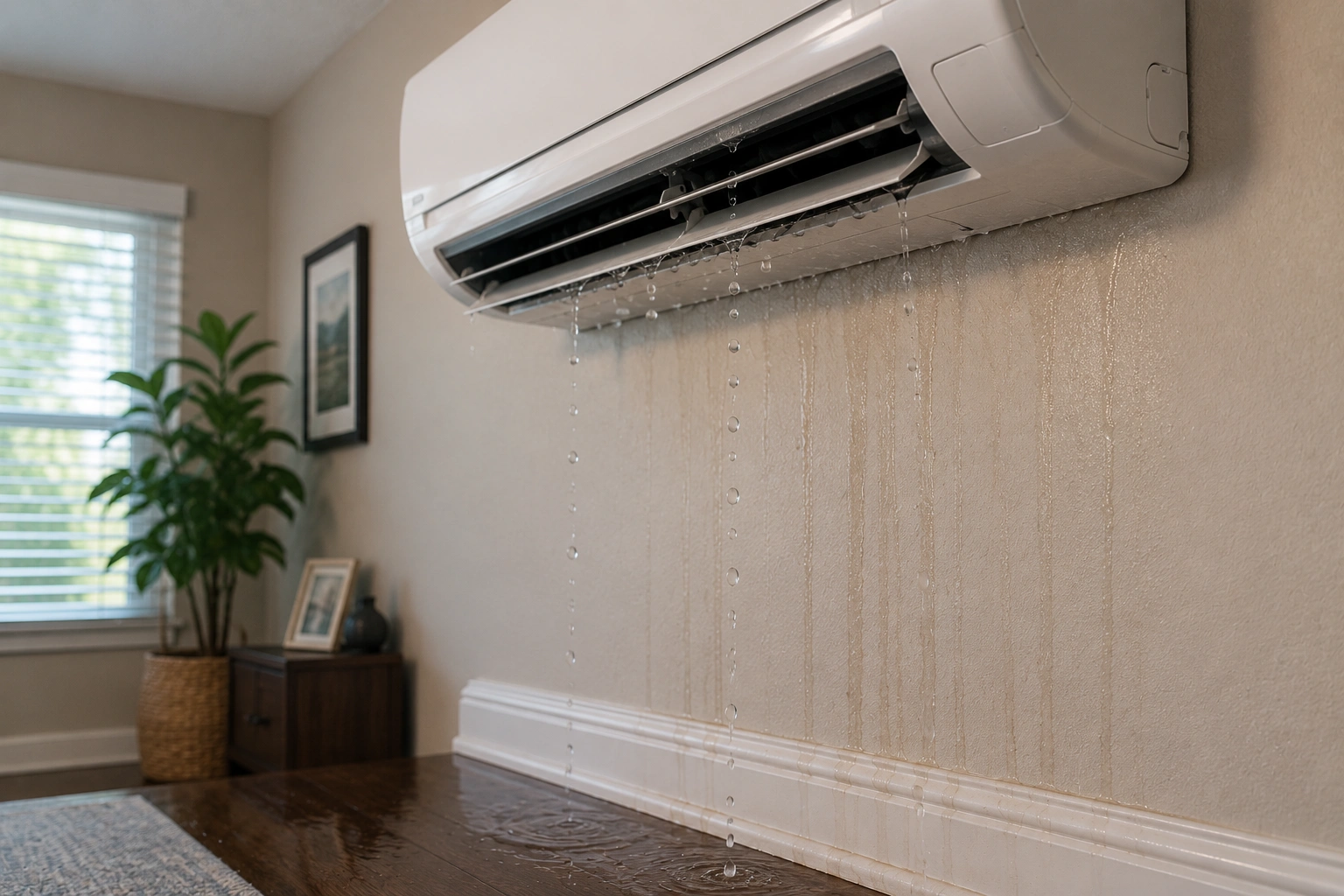
Seeing water leaking from your air conditioner inside your home can quickly become stressful, especially during the hot summers in Texas. While air conditioners naturally produce condensation during normal operation, water should never leak into your home. Indoor AC leaks are usually a warning sign that something in the system is not functioning properly.
At APEX Electrical, A/C & Heating LLC, we help homeowners across Central Texas diagnose and repair AC water leaks before they lead to serious water damage, mold growth, or system failure.
Your air conditioning system removes humidity from indoor air as part of the cooling process. Moisture collects on the evaporator coil and drains through a condensate drain line into a drain pan.
When any part of this drainage process becomes blocked or damaged, water can overflow and leak inside your home.
Common causes of AC water leaks include:
Ignoring water leaks can lead to ceiling damage, flooring issues, mold growth, and expensive HVAC repairs.
A clogged condensate drain line is one of the most common reasons an AC leaks water indoors.
Over time, dirt, algae, dust, and debris can block the drain line, preventing water from draining properly. When this happens, condensation backs up into the drain pan and eventually overflows.
Signs of a clogged drain line include:
Routine maintenance can help keep the condensate drain line clean and flowing properly.
A dirty air filter restricts airflow across the evaporator coil. Without proper airflow, the coil can become too cold and freeze.
When the ice eventually melts, excess water may overflow the drain pan and leak into the home.
Warning signs include:
Changing air filters regularly is one of the simplest ways to prevent frozen coils and indoor leaks.
Frozen evaporator coils are another major cause of indoor water leaks.
Coils may freeze because of:
As the ice melts, large amounts of water can overwhelm the drainage system and spill inside the house.
The condensate drain pan collects moisture before it exits through the drain line. Over time, older drain pans may crack, rust, or deteriorate.
A damaged drain pan can cause:
Older HVAC systems are especially vulnerable to drain pan corrosion.
Low refrigerant reduces pressure inside the AC system, causing the evaporator coil to freeze. When the frozen coil melts, excess water may overflow the drain pan.
Additional signs of low refrigerant include:
Refrigerant leaks should always be repaired by a licensed HVAC technician.
Some AC systems use a condensate pump to remove water from the unit, especially when gravity drainage is not possible.
If the pump fails:
A malfunctioning condensate pump should be repaired or replaced immediately.
Improperly installed air conditioning systems may not drain correctly. If the unit is not level or the drain line is incorrectly configured, water may leak indoors.
Poor installation can lead to:
Professional installation helps ensure proper system performance and drainage.
An AC water leak may seem minor at first, but it can quickly create larger problems if ignored.
Potential risks include:
Addressing leaks early helps prevent expensive home repairs and health concerns.
If you notice water leaking from your AC system:
Avoid continuing to run the system until the problem is properly diagnosed.
Clean filters improve airflow and reduce the risk of frozen coils.
Professional maintenance helps identify drainage issues before they cause leaks.
Maintenance services may include:
Routine cleaning helps prevent algae, dirt, and debris buildup inside the condensate line.
Low refrigerant should be repaired quickly to prevent freezing and moisture problems.
Older drain pans should be inspected for rust, cracks, or corrosion during regular maintenance visits.
You should schedule professional AC service if:
Professional diagnosis can prevent larger HVAC and water damage repairs.
At APEX Electrical, A/C & Heating LLC, we provide expert AC repair, drain line cleaning, refrigerant diagnostics, and preventative maintenance services throughout Central Texas. Our experienced technicians quickly identify the source of indoor AC leaks and restore proper system performance.
We proudly serve homeowners in:
Whether you need drain line repairs, frozen coil service, or complete AC diagnostics, our team is ready to help keep your home cool and protected.
Indoor AC leaks are commonly caused by clogged drain lines, frozen evaporator coils, dirty filters, damaged drain pans, or low refrigerant levels.
Yes. Dirty filters restrict airflow, which can freeze the evaporator coil and create excess water when the ice melts.
It is best to turn the system off and have it inspected to prevent water damage and further HVAC issues.
Minor clogs may sometimes be cleared with a wet/dry vacuum, but professional cleaning is recommended for recurring blockages.
Yes. Low refrigerant can freeze the evaporator coil, leading to excess water when the ice melts.
Drain lines should typically be inspected and cleaned during annual HVAC maintenance visits.