


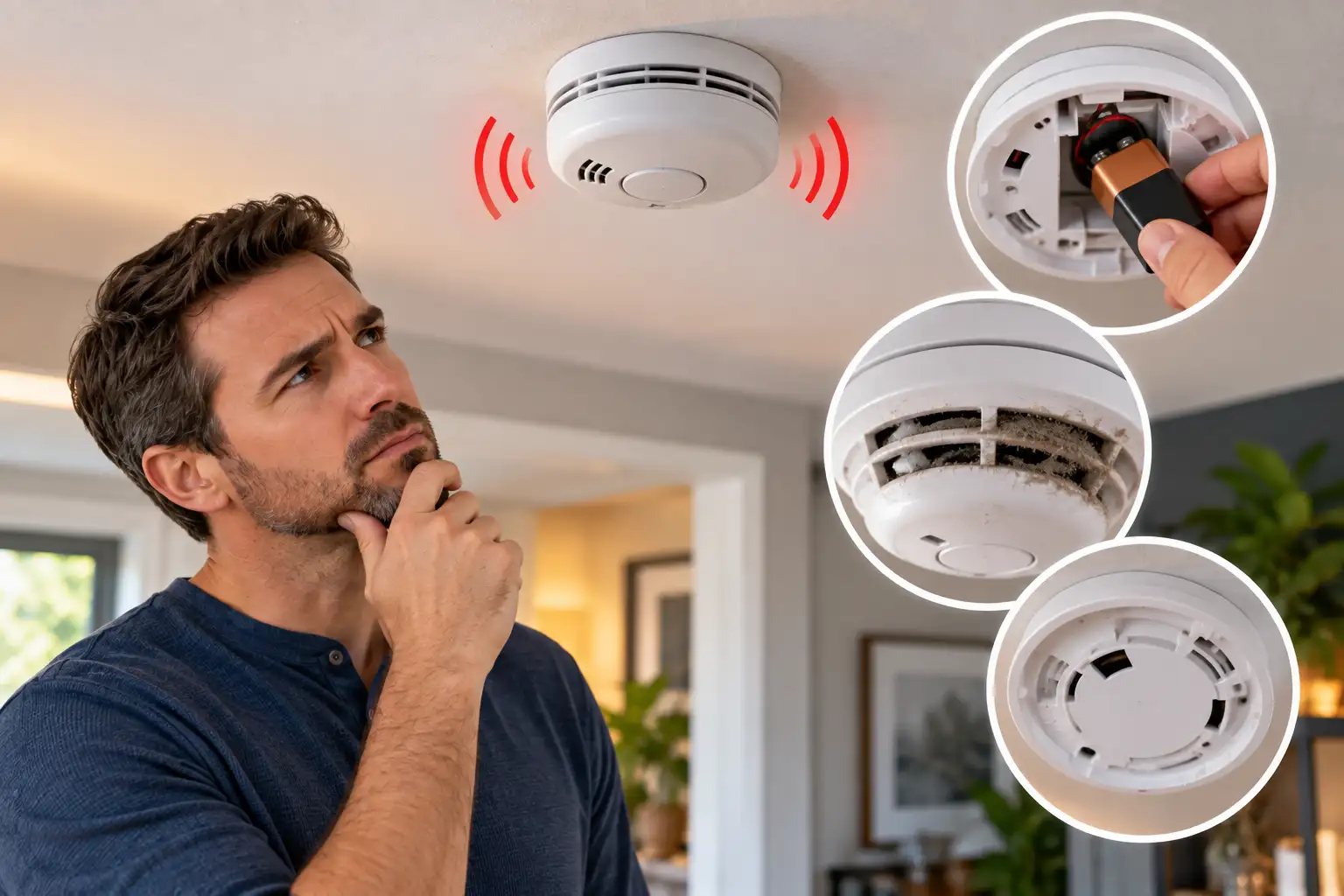
A smoke alarm can keep chirping after a battery change if the battery is not the specified type or properly seated, the unit needs attention described in its manual, the alarm has reached its replacement date, or the sound is coming from another device. A new battery alone does not confirm that the alarm is working correctly.
First distinguish a brief maintenance chirp from an active emergency alarm. If there is a fire or carbon monoxide alert, smoke, or uncertainty about immediate danger, get everyone outside and call 911. Do not stay inside troubleshooting a possible emergency.
During a confirmed maintenance chirp, establish which device needs attention. Note any light pattern, spoken message, or displayed code without disabling the other alarms.
Write down the brand and model before searching for instructions. A smoke alarm, a carbon monoxide alarm, and a combination unit may use different signals. Even devices from the same brand can have different troubleshooting steps.
Avoid treating a generic internet statement such as one beep means battery as a universal rule. Match the signal to the manual for that exact alarm.
For an alarm with a user-replaceable battery, compare the battery you installed with the type specified in the manual. Follow the instructions for orientation, connection, and closing the compartment. Do not force a battery door that does not close correctly.
A sealed battery alarm is different. It is not designed for an ordinary battery swap. If you are unsure which type you have, find the model information before attempting to open the housing.
The U.S. Fire Administration’s smoke alarm guidance distinguishes replaceable-battery, sealed-battery, and hardwired alarms. It also emphasizes following the manufacturer’s care instructions and keeping alarms operational.
If the battery is correct, use the manual’s troubleshooting sequence. Some alarms have instructions for cleaning or resetting after maintenance. The procedure, permitted cleaning method, and button sequence should come from the manufacturer.
Do not improvise with cleaning sprays, paint, tools inside the sensor openings, or a reset procedure for a different device. If the instructions are unclear, contact the manufacturer with the model number and the sound pattern you recorded.
Battery replacement and alarm replacement are separate tasks. A fresh battery does not make an aging sensor new again.
The U.S. Fire Administration advises replacing smoke alarms ten years from their manufacture date. Follow any earlier replacement instruction from the manufacturer, and use the specified lifespan for a carbon monoxide or combination alarm rather than assuming all devices are identical.
If the alarm is hardwired, the warning continues after the manufacturer’s checks, or the unit needs replacement, arrange appropriate help. Do not dismantle wiring or disconnect the alarm network to silence the sound.
Give the electrician the model, manufacture date, signal pattern, and steps already completed. Say whether one alarm or several are affected. That information is more useful than repeatedly buying batteries without identifying the warning.
Apex provides smoke and carbon monoxide detector services in New Braunfels. Ask for the affected alarm and its connections to be assessed while maintaining the home’s protection.
Can I remove the battery until tomorrow? Do not leave an alarm disabled to stop a nuisance sound. Resolve the warning or arrange prompt replacement and help.
Does a hardwired alarm still use a battery? Many do. Confirm the backup arrangement for your model rather than assuming household power removes the need to check it.